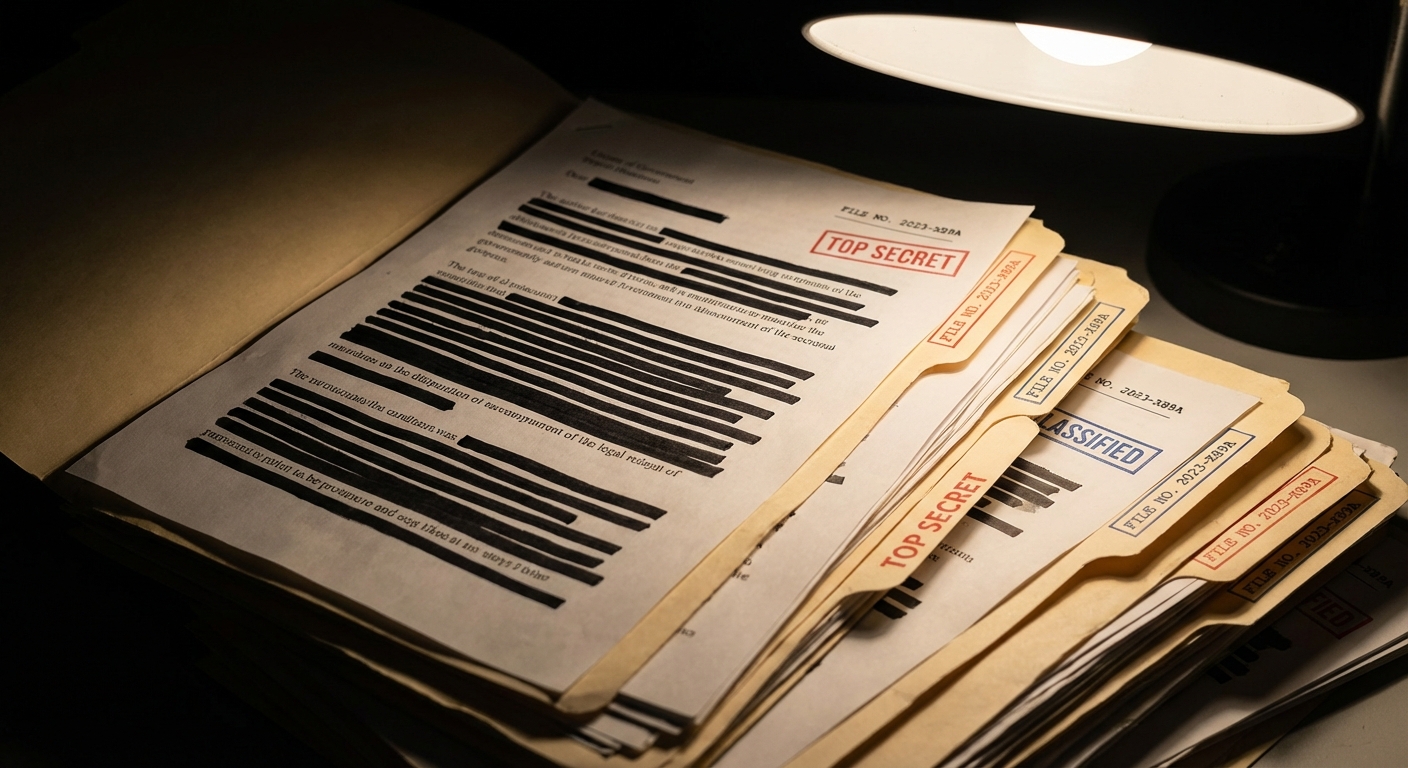
The Justice Department released the Epstein files this week, more than 11,000 documents totaling nearly 30,000 pages related to Jeffrey Epstein’s sex trafficking operation. The release follows years of demands from lawmakers, victims, and the public for transparency about who enabled Epstein’s crimes.
But if anyone expected explosive revelations, the reality is more complicated. The documents are heavily redacted, with black bars covering names, faces, and identifying information for more than 1,200 people. The DOJ says it erred on the side of protecting victims, but critics argue the redactions also shield powerful people who may have been complicit.
What emerges from the readable portions is a picture of a vast network that operated with remarkable openness, enabled by wealth, connections, and institutional failures at every level.
What the Documents Show
The released files include FBI interview transcripts, victim statements, flight logs, and internal communications. They document Epstein’s systematic recruitment of young girls, often from disadvantaged backgrounds, and the operation of properties in New York, Florida, New Mexico, and the Caribbean.
Several emails reference “co-conspirators,” with prosecutors identifying ten potential collaborators beyond Ghislaine Maxwell, who was convicted in 2021. But the names of these individuals remain redacted, leaving their identities subject to speculation.
The documents also reveal the scope of law enforcement’s knowledge before Epstein’s 2019 arrest. Victims had been coming forward for years, and multiple agencies had documented complaints. The question of why action wasn’t taken sooner runs throughout the files, though no clear answer emerges.
Flight logs show Epstein’s private jets carrying passengers to his various properties, but the names of those passengers, beyond previously known figures, are mostly redacted. The logs suggest a much larger network of visitors than has been publicly acknowledged.
The Redaction Controversy
Deputy Attorney General Todd Blanche defended the extensive redactions, saying the DOJ adopted a “broad approach” to protecting victims. Every woman who appeared in photos with Epstein had her face blacked out. Names of anyone who might be a victim were removed.
But this approach has been criticized by victims’ advocates and transparency groups. By treating everyone who interacted with Epstein as a potential victim, the DOJ may have shielded people who were participants rather than prey. The redactions make it impossible to assess who knew what.
Some lawmakers have demanded unredacted versions in classified settings. Others argue that the public has a right to know the full extent of who enabled Epstein’s operation, particularly if those individuals remain in positions of power.
The documents do name some previously known figures, including politicians and celebrities whose interactions with Epstein were already public. But the new material is overwhelmingly redacted precisely where it might reveal unknown connections.
What We Still Don’t Know
The fundamental questions about Epstein remain unanswered. How did he amass his fortune? His financial dealings remain opaque, with no clear legitimate source for his wealth. Who protected him for so long? The documents show institutional failures but don’t explain why warnings were ignored.
Most importantly, who else participated in his crimes? Maxwell was convicted, but she was clearly not the only enabler. The ten co-conspirators referenced in the documents remain unnamed. Whether they will ever face accountability is unclear.
Epstein’s death in a Manhattan jail cell in 2019, ruled a suicide, foreclosed any trial that might have exposed his network. The documents released this week are what remains, and they raise more questions than they answer.
The Broader Implications
The Epstein case has become a symbol of how wealth and connections can buy impunity. The documents released this week reinforce that perception. Here was an operation that was widely known, poorly hidden, and repeatedly reported to authorities. And it continued for decades.
The victims, meanwhile, have been living with their trauma while waiting for justice that has been partial at best. Many have expressed frustration that the focus remains on famous names rather than systemic accountability.
For the justice system, the case is an ongoing embarrassment. The 2008 plea deal that allowed Epstein to serve minimal time was scandalous then and looks worse in retrospect. The failure to act on subsequent complaints is harder to explain with each new revelation.
The Bottom Line
The Epstein files release is both a milestone and a disappointment. After years of anticipation, the documents are finally public, but their heavily redacted state means the full picture remains hidden.
What’s clear is that Epstein’s operation was vast, long-running, and enabled by failures at multiple levels. What remains unclear is who else participated and why they haven’t been held accountable.
The DOJ says the redactions protect victims, and that’s probably true for some of the blacked-out names. But it’s also convenient for anyone whose connection to Epstein they’d prefer to keep hidden. Until unredacted versions become available, the full truth remains locked behind black bars.