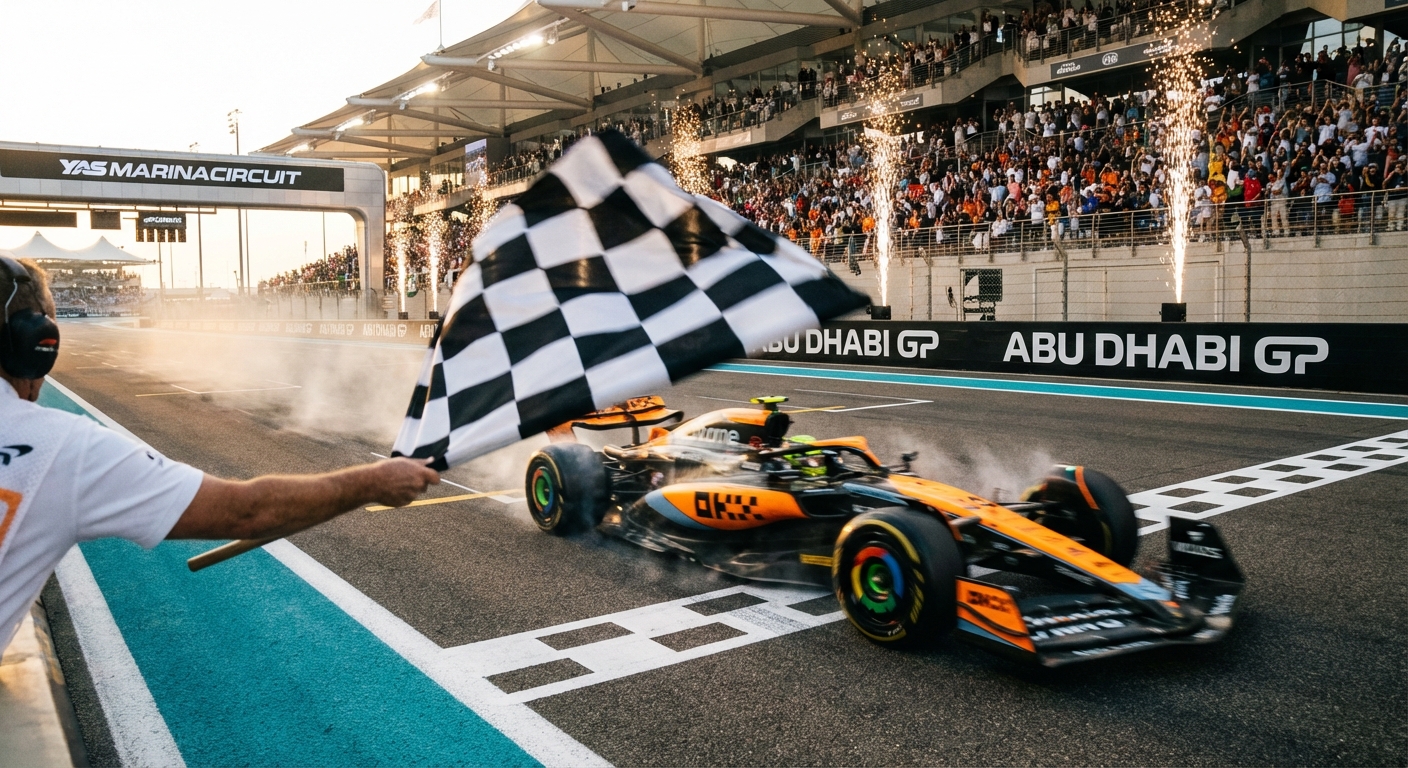
Lando Norris is the 2025 Formula One World Drivers’ Champion. The McLaren driver clinched the title at today’s season finale in Abu Dhabi, beating defending champion Max Verstappen by just two points in one of the closest championship battles in recent memory.
For Norris, 26, it’s the culmination of a journey that began when he entered F1 in 2019 as a promising but unproven talent. For McLaren, it’s validation of a remarkable turnaround that saw the storied team go from backmarker to championship contender in just a few years. And for F1 itself, the season delivered exactly the kind of drama that the sport’s growing global audience craves.
The championship came down to the final race, with Norris needing to finish ahead of Verstappen to secure the title. He did exactly that, executing a near-perfect weekend while Verstappen, battling car issues, could only manage fourth.
How We Got Here
The 2025 season began with Verstappen as the heavy favorite. The Dutch driver had won the previous four championships, three of them dominant, and Red Bull’s technical advantage seemed unassailable. Most predictions had Verstappen cruising to another title.
But F1’s new regulations, designed to improve racing and level the field, had unexpected consequences. McLaren’s design team, led by technical director James Key, found performance that Red Bull struggled to match. By mid-season, the papaya orange cars were consistently challenging for wins.
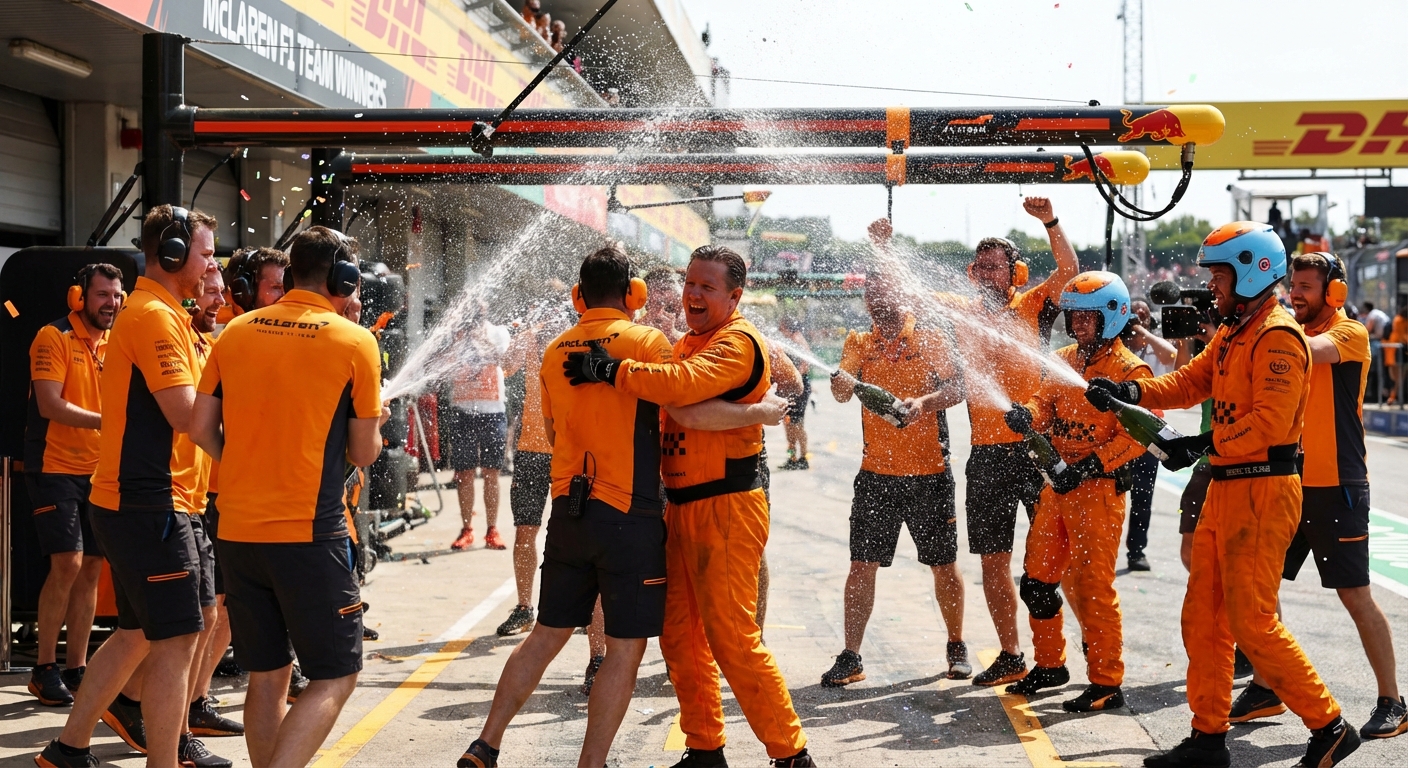
Norris won his first Grand Prix of the season in Miami, then added victories in Canada, Britain, and Singapore. Each win built confidence and momentum. Meanwhile, Verstappen, while still fast, found himself unable to dominate as he had in previous years. Reliability issues and strategic errors cost Red Bull crucial points.
The championship lead changed hands multiple times. Heading into the final race, Norris held a slim advantage, but Verstappen’s pace in qualifying suggested the title fight wasn’t over. The tension was extraordinary.
The Race That Decided It
Today’s Abu Dhabi Grand Prix was a pressure cooker. Norris qualified third; Verstappen second. A poor start or first-lap incident could flip the championship. Both drivers knew it.
What followed was 58 laps of controlled aggression. Norris made a clean start, moved into second position by lap 10, and then hunted down the leader. His tire management was exceptional, allowing him to push when it mattered while preserving his rubber for the critical final stint.
Verstappen, meanwhile, was dealing with a car that wasn’t responding to setup changes. The Red Bull lacked pace in the race’s middle segment, and by the time Verstappen needed to attack, the gap was too large. He finished fourth, ending his championship reign.
What Makes This Special
Norris is the first British F1 champion since Lewis Hamilton won his last title in 2020. That’s significant in a sport where British drivers have historically dominated. More importantly, he’s the first champion to emerge from the streaming generation of F1 fans, those who discovered the sport through Netflix’s “Drive to Survive” documentary series.
His personality has been central to F1’s expansion into new demographics. Unlike some previous champions known for their intensity, Norris is relaxed, funny, and refreshingly honest about the pressures of elite sport. He’s spoken openly about mental health and anxiety, topics that previous generations of drivers rarely addressed publicly.
McLaren’s story is equally compelling. The team won 12 world championships between 1974 and 2008 but then entered a decade-long decline. There were seasons when McLaren finished outside the top five, unthinkable for such a prestigious name. The turnaround required wholesale changes in personnel, facilities, and culture.
What It Means for F1
The 2025 championship validates F1’s direction. The new regulations achieved their goal of creating closer competition. Multiple teams were capable of winning races throughout the season, and the championship went down to the wire. For a sport sometimes criticized as predictable, this season was anything but.
It also confirms that F1’s American expansion is working. The sport’s popularity in the United States has grown dramatically, driven by new races in Miami and Las Vegas plus the cultural penetration of “Drive to Survive.” Having an exciting young champion with social media savvy will only accelerate that growth.
For Red Bull and Verstappen, the result is a setback but not a disaster. Verstappen remains one of the fastest drivers in F1 history, and Red Bull has the resources to develop a championship-winning car. The rivalry between Norris and Verstappen will likely define F1’s next several seasons.
The Bottom Line
Lando Norris is Formula One’s newest champion, and he earned it in the best possible way: by beating a worthy opponent in a fight that went the distance. The two-point margin is the closest since the 2021 championship decided under controversial circumstances in Abu Dhabi.
For F1, the season delivered everything the sport could want: drama, competition, and a new star cementing his status. For fans who suffered through years of predictable Verstappen dominance, this championship was a reminder of why they fell in love with the sport.
And for Norris, it’s just the beginning. At 26, he’s young enough to chase multiple championships. Today, though, is about celebrating the first one.