
Chuck Norris didn't just die on Thursday morning in Hawaii. He died twice: once as a man, surrounded by his family at age 86, and once as a character the internet had spent two decades building into something no action star could ever actually be. The gap between those two deaths tells us something important about how celebrity works in the age of the internet, and about the strange machine that turns real people into digital folklore.
His family confirmed the news on Friday, writing on Instagram that "it is with heavy hearts that our family shares the sudden passing of our beloved Chuck Norris yesterday morning." They asked for privacy about the circumstances. Just nine days earlier, on his 86th birthday, Norris had posted a video of himself working out and sparring in Hawaii, captioning it "I don't age... I level up." The timing was cruel, but it was also perfectly on brand for a man whose public image had long ago decoupled from biological reality.
From Ryan, Oklahoma, to the World Middleweight Title
Carlos Ray Norris was born on March 10, 1940, in Ryan, Oklahoma, and grew up poor. His family moved to Torrance, California, when he was twelve. After high school, he enlisted in the United States Air Force in 1958 and was stationed at Osan Air Base in South Korea, where he picked up the nickname "Chuck" and began training in Tang Soo Do. That accident of military geography changed the direction of American pop culture in ways nobody could have predicted.
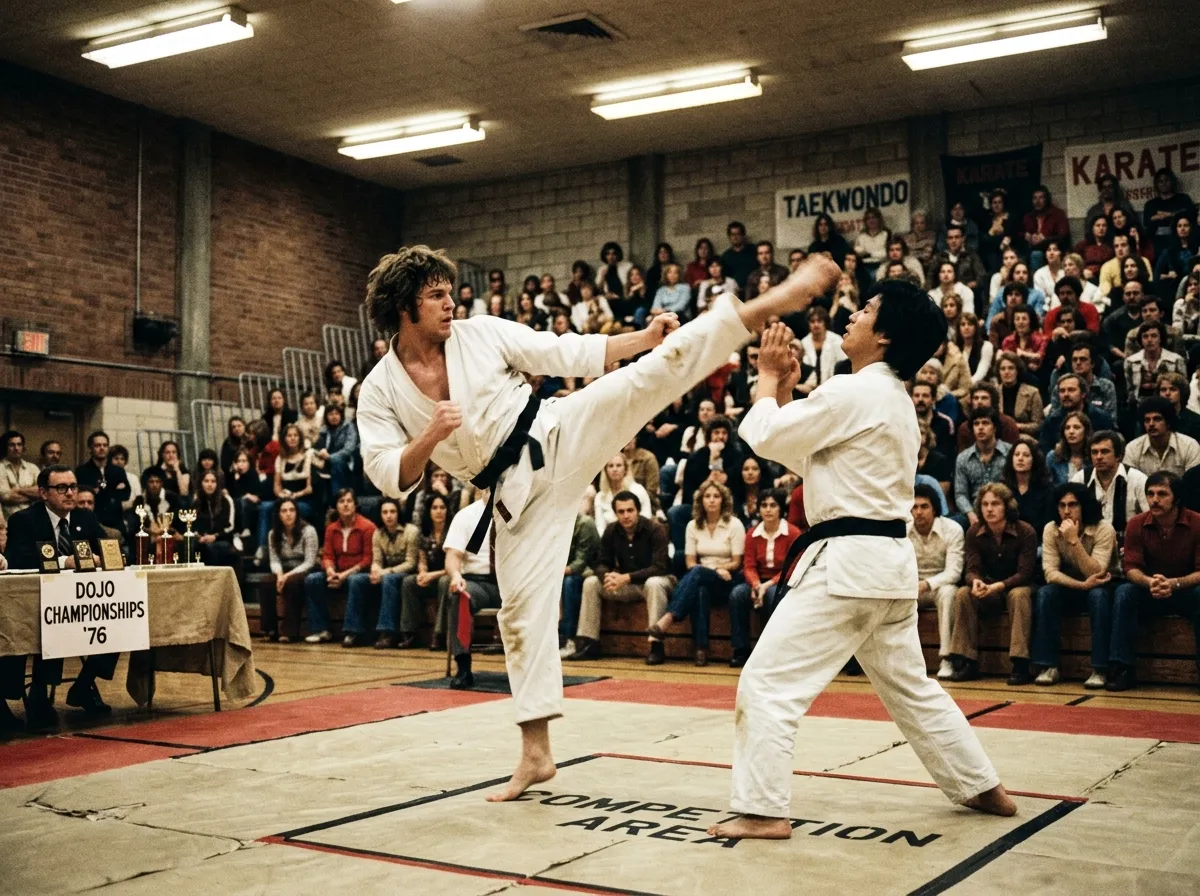
After his discharge in 1962, Norris opened a martial arts studio in Torrance while applying to become a police officer. The studio grew into a chain, and his client list read like a Hollywood casting sheet: Bob Barker, Priscilla Presley, Donny and Marie Osmond, and Steve McQueen, who would later push Norris toward acting. But before the cameras found him, Norris was busy becoming one of the most dominant tournament fighters in the country. He won the World Middleweight Karate Championship in 1968 and defended the title five consecutive times before retiring undefeated in 1974. He held black belts in karate, taekwondo, Tang Soo Do, Brazilian jiu-jitsu, and judo.
The Action Star Who Almost Faded Away
Norris's film career began modestly. He played a villain opposite Bruce Lee in "The Way of the Dragon" in 1972, and their fight scene in the Roman Colosseum remains one of the most celebrated sequences in martial arts cinema. His first leading role, "Breaker! Breaker!" was shot in eleven days. But by the early 1980s, Norris had carved out a niche as an action film star with hits like "Lone Wolf McQuade," the "Missing in Action" trilogy, "Code of Silence," and "The Delta Force."
The real commercial breakthrough came on television. "Walker, Texas Ranger" ran on CBS from 1993 to 2001, spanning roughly 200 episodes. Norris played Cordell Walker, a Vietnam veteran with Cherokee ancestry who dispensed justice with roundhouse kicks and a moral code rooted in what the show presented as the honor of the Old West. The show was not cool. Critics ignored it or mocked it. But it pulled steady ratings for eight seasons, and by the time it ended, Norris was less a movie star than a basic cable institution.
Then came the fade. By the early 2000s, Norris was in his sixties, his action career was over, and "Walker" was in syndication. He was still famous, but in the way that retired athletes and sitcom stars are famous: recognized at airports, forgotten by the culture at large. He wrote books, ran a foundation for at-risk youth called KickStart, and settled into the comfortable obscurity that greets most action stars of a certain vintage.
What happened next was something no publicist could have engineered.
The Meme That Changed Everything
In 2005, a format emerged on the Something Awful forums: absurd, hyperbolic "facts" about celebrities, originally centered on Vin Diesel. A Brown University student named Ian Spector built a random fact generator website and, at some point, swapped in Chuck Norris as the subject. The switch was inspired. Norris's persona, built on decades of stoic toughness in B-movies and basic cable, was the perfect vessel for escalating absurdity. "Chuck Norris doesn't read books. He stares them down until he gets the information he wants." "Chuck Norris counted to infinity. Twice." "Chuck Norris does not sleep. He waits."
Spector's site drew 10,000 users overnight. The jokes spread through email forwards, MySpace profiles, and CollegeHumor posts in an era before social media algorithms dictated what went viral. As Spector later recalled, "When I launched my website in 2005, people would literally huddle around someone's computer to read and laugh together." The meme's reach was staggering precisely because it required no context. You didn't need to have seen "Missing in Action" or watched a single episode of "Walker, Texas Ranger" to understand the joke. The humor was self-contained: a man so tough that the laws of physics bent around him.

Norris himself leaned into it. In a 2006 appearance on "The Best Damn Sports Show Period," he read a top-ten list of Chuck Norris facts on camera. His personal favorite: "They wanted to put Chuck Norris's face on Mount Rushmore, but the granite wasn't hard enough for his beard." He later joked in interviews about the cobra bite fact: "Did you know that I got bit by a king cobra? After five days of agonizing pain, the cobra died."
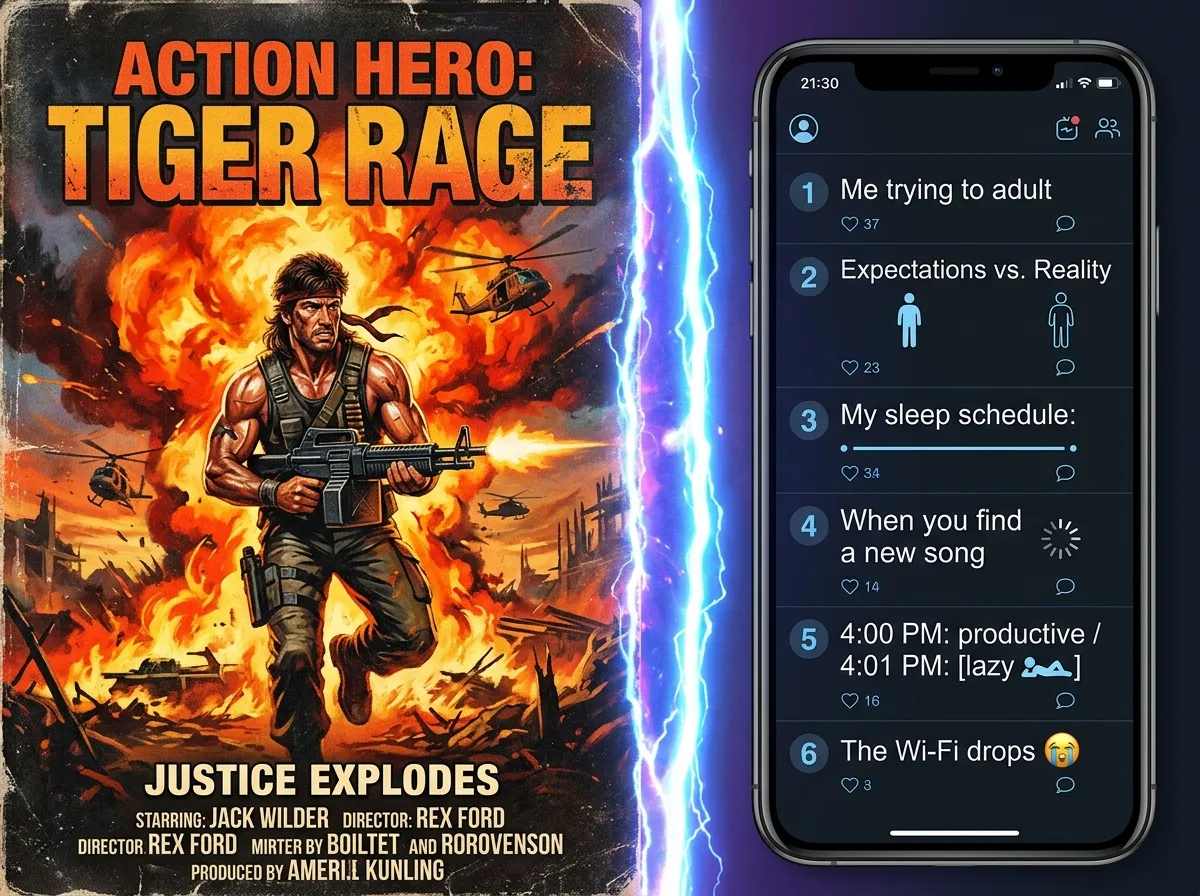
The meme's cultural significance went far beyond comedy. It arrived before "meme" was a word most people used, and it helped establish the grammar of internet humor: short lines, repeated structure, escalating exaggeration, and collective authorship. In a real sense, the Chuck Norris facts format was a prototype for the way humor would work online for the next two decades.
The Immortality Engine: A Framework for Internet-Era Legacy
Here is where Chuck Norris's story becomes something larger than one man's obituary. His death offers a chance to examine a phenomenon that has no real precedent in the history of fame: the internet's ability to completely rewrite a public figure's cultural meaning, independent of anything that person actually did.
Consider the mechanics of what happened. By 2004, Norris was a retired action star with a filmography that, while commercially successful, was not critically respected. He was not in the conversation about great American actors. He was not even in the conversation about great action stars, a tier occupied by Schwarzenegger, Stallone, and Willis. He was, to be blunt, a guy who used to be on CBS. The meme didn't just extend his fame. It created an entirely new version of him that was more famous than the original ever was.
This is what I'd call the Internet Immortality Engine, and it operates according to a specific logic that's worth understanding because it will determine how many public figures are remembered in the decades ahead. The engine has three components. First, it requires a subject whose real persona contains a seed of exaggeration, something that can be amplified to absurdity without feeling mean-spirited. Norris's decades of playing impossibly tough characters provided that seed. Second, the resulting meme must be separable from its source material. You didn't need to know who Chuck Norris was to laugh at Chuck Norris facts, which meant the meme could propagate far beyond his existing audience. Third, and most critically, the meme version must be more interesting than the real version. The fictional Chuck Norris, who could slam a revolving door and make onions cry, was a more compelling character than the real Chuck Norris, a conservative Christian who wrote columns for WorldNetDaily.
This three-part engine explains why the Chuck Norris meme worked while similar attempts with other celebrities mostly didn't. It also explains a deeper truth about internet-era fame: the version of you that the internet creates will outlast the version of you that actually existed. For better or worse, more people under forty know Chuck Norris as a meme than as an actor. That is a new kind of immortality, and Norris was its first real beneficiary.
The framework also predicts who gets this treatment in the future. The internet doesn't mythologize randomly. It selects for figures who are already slightly larger than life, whose personas contain an internal exaggeration that digital culture can crank up to eleven. The same pattern plays out in how pop stars now manage their public images, carefully controlling the gap between person and persona, though few have experienced the complete identity replacement that Norris did.
The Complicated Man Behind the Meme
The meme version of Chuck Norris was apolitical, a force of nature beyond ideology. The real Chuck Norris was not. He endorsed Mike Huckabee for president in 2007, appearing in a campaign ad that leaned directly on the Chuck Norris facts format. He endorsed Donald Trump in 2016 and wrote guest columns praising him ahead of the 2020 and 2024 elections. He authored "Black Belt Patriotism: How to Reawaken America," which advocated for conservative Christian governance. He wrote columns questioning President Obama's citizenship and warning that the country was heading toward "a thousand years of darkness."
Trump, speaking to reporters after Norris's death was announced, called him "a great guy" and "a tough, great guy" who was "a great supporter." Former President George W. Bush said he and Laura were "saddened" by the loss, praising Norris's charitable work with young people through martial arts instruction.
The gap between the meme Norris and the political Norris created a tension that many of his younger fans simply resolved by ignoring the latter. Internet culture has a long history of separating artists from their work and personas from their politics, but in Norris's case the separation was especially clean because the meme version was so thoroughly detached from the real person. You could share a Chuck Norris fact without endorsing, or even knowing about, Chuck Norris's politics. That detachment is itself a feature of the Internet Immortality Engine: once the meme version takes over, the real person's views become footnotes rather than headlines.
The meme's cultural power did begin to fade after the Huckabee campaign, when the distance between joke and reality collapsed. As Gizmodo noted, the political co-option "was when the meme started to die." But the meme never fully disappeared. It just settled into the permanent background of internet culture, a reference everyone understood, a format everyone had internalized.
A Life Beyond the Jokes
Norris's family asked for privacy about the circumstances of his death, and they deserve it. But the biographical details that frame his final years matter for understanding the full person. His mother, Wilma, died in 2024. His first wife, Dianne Holechek, with whom he had two sons (Mike and Eric), passed away in December 2025. He had been married to Gena O'Kelley since 1998, and they had twins, Dakota and Danilee. He also had a daughter, Dina, from a relationship during his first marriage, a fact he publicly acknowledged in 2004.
Beyond the films and the memes, Norris ran KickStart, a foundation that brought martial arts instruction to at-risk youth in Texas schools. He was a nationally syndicated health and fitness columnist. He authored roughly ten books, including martial arts manuals, two memoirs, and two novels. He trained into his eighties. None of this made for good memes, but it made for a full life.
Arnold Schwarzenegger, Jean-Claude Van Damme, Sylvester Stallone, and Stephen King were among those who posted tributes. Most of them mentioned the roundhouse kick. Almost all of them mentioned the memes.
What It Tells Us
Chuck Norris lived 86 years, won six consecutive world karate championships, starred in more than thirty films, anchored a television show for eight seasons, and raised millions for charity. But when the news of his death broke, the first thing most people did was share a Chuck Norris fact. That reaction is not disrespectful. It is, in a strange way, the highest compliment the internet knows how to pay.
The Internet Immortality Engine that turned a fading action star into a permanent fixture of digital culture will keep running long after this news cycle ends. It will select new subjects, build new myths, and create new versions of real people that outpace the originals. Norris was the prototype. The lesson of his legacy is that in the internet age, the story people tell about you will always be louder than the story you tell about yourself. Whether that's a good thing depends entirely on the story.
Chuck Norris didn't die. He just roundhouse kicked his way into the next dimension. At least, that's how the internet will remember it. And at this point, the internet's version is the one that lasts.
Sources
- Chuck Norris, martial arts star, dies at 86 - NPR
- Chuck Norris death: How an internet meme turned a fading action star into a legend - Slate
- How Chuck Norris Became the Internet's First Meme and Myth - Newsweek
- In Praise of Chuck Norris Facts, Key Artifact from the Time When It Felt Great to Be Online - Gizmodo
- Chuck Norris Dead: 'Walker Texas Ranger' Action Icon Was 86 - Variety