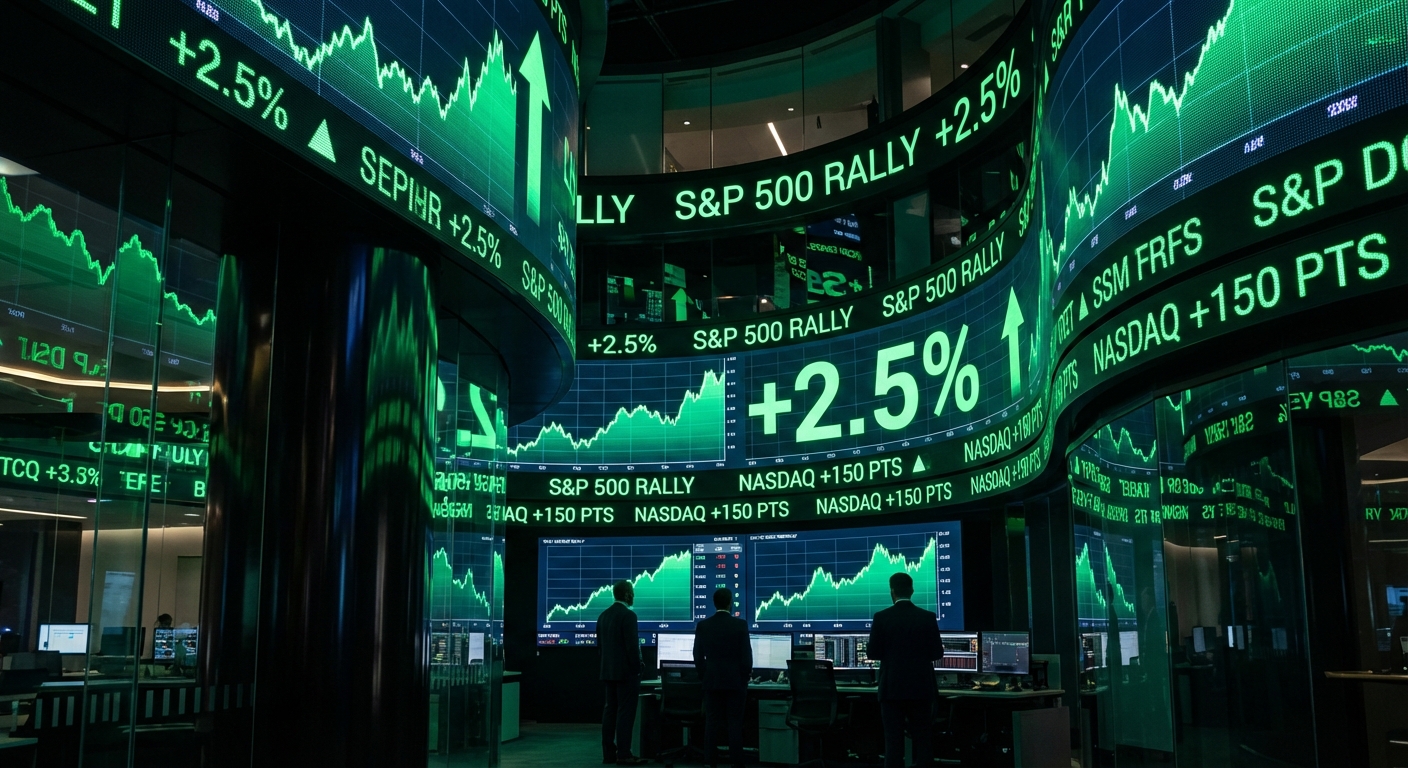
The American stock market has opened 2026 with a performance that would have seemed implausible just a few years ago. On Tuesday, the Dow Jones Industrial Average crossed 49,000 for the first time in history, setting a fresh all-time high at 49,462. The S&P 500 followed suit, reaching a new record at 6,944. These aren’t small incremental gains building on past highs; they represent a rally that has accelerated through January, driven by optimism about artificial intelligence, expectations for Federal Reserve rate cuts, and a resilience in corporate earnings that has surprised even bullish forecasters.
This matters because the stock market, while not a perfect measure of economic health, shapes everything from retirement accounts to consumer confidence to corporate hiring decisions. When markets reach these levels, there are real consequences for real people. The question everyone from professional money managers to casual 401(k) holders should be asking is whether this rally reflects genuine economic strength or whether markets have gotten ahead of fundamentals in ways that create risk.
What’s Driving the Rally
The simplest explanation for current market strength is that investors believe in artificial intelligence, specifically in its ability to transform corporate productivity and generate new revenue streams. This isn’t abstract speculation. Companies deploying AI tools are reporting measurable gains in efficiency, and the businesses building AI infrastructure are posting extraordinary growth numbers.
The evidence is visible in which stocks are leading the market. In the first week of 2026, memory chip companies like Sandisk and Western Digital gained 28% and 17% respectively. Seagate rose 14%. Among S&P 500 stocks, 20 of the top 25 performers were technology companies, predominantly semiconductor firms and what analysts call “AI-adjacent trades.” When a market rallies this broadly, it often signals froth. When gains concentrate this heavily in one sector, it signals something more specific: a massive bet on AI’s near-term economic impact.
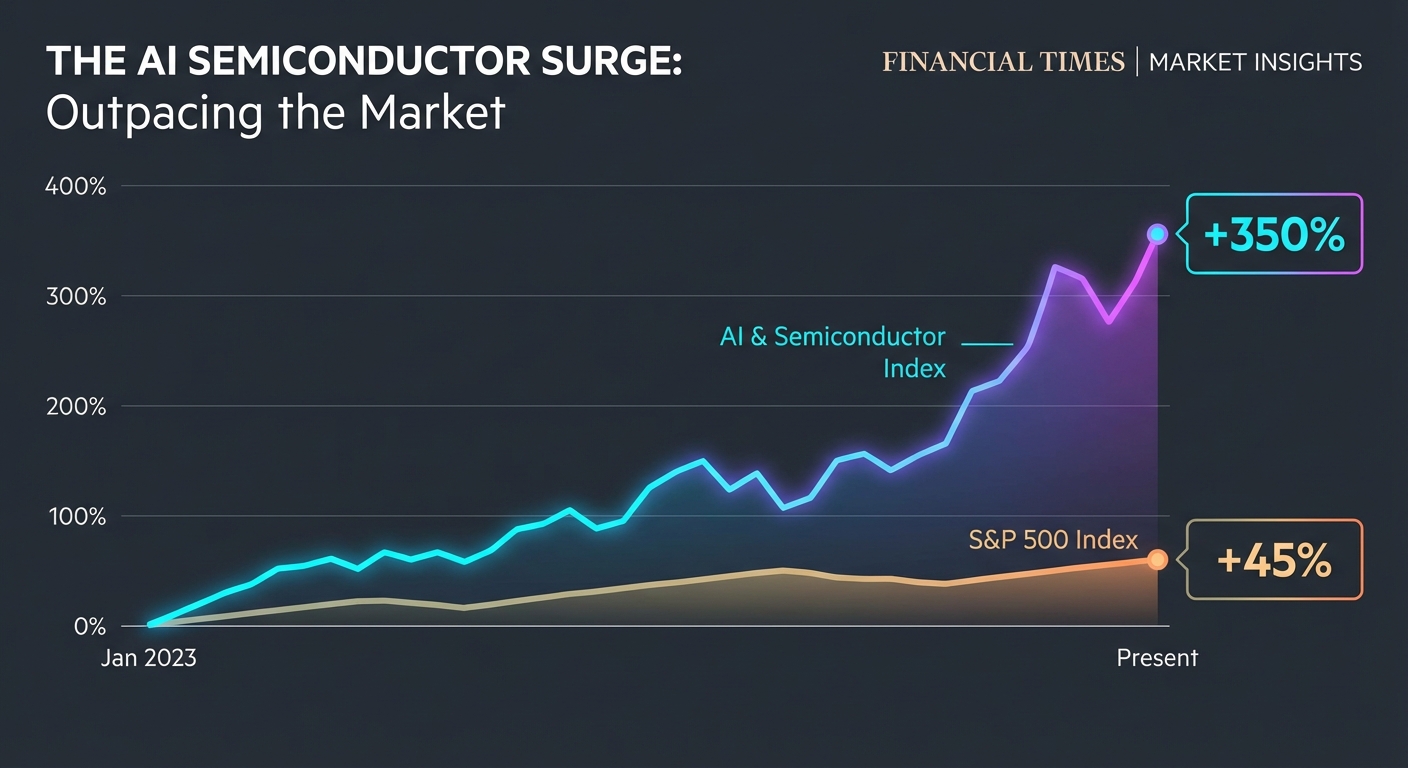
Fidelity International has gone so far as to call AI “the defining theme for equity markets” in 2026. BlackRock Investment Institute argues that AI “will likely keep trumping tariffs and traditional macro drivers.” These are the world’s largest asset managers, and they’re telling clients that the old rules about what moves markets may be changing. Whether that proves wise or reckless will only become clear in retrospect.
Beyond AI, the second major driver is monetary policy expectations. Fed funds futures pricing indicates odds of two quarter-point rate cuts coming in 2026. Lower interest rates reduce borrowing costs for corporations, increase the present value of future earnings, and make alternatives to stocks like bonds less attractive. The market is essentially betting that the Federal Reserve will cut rates without triggering inflation, a soft landing that policy makers have rarely achieved historically but that seems increasingly possible given current data.
The Valuation Problem
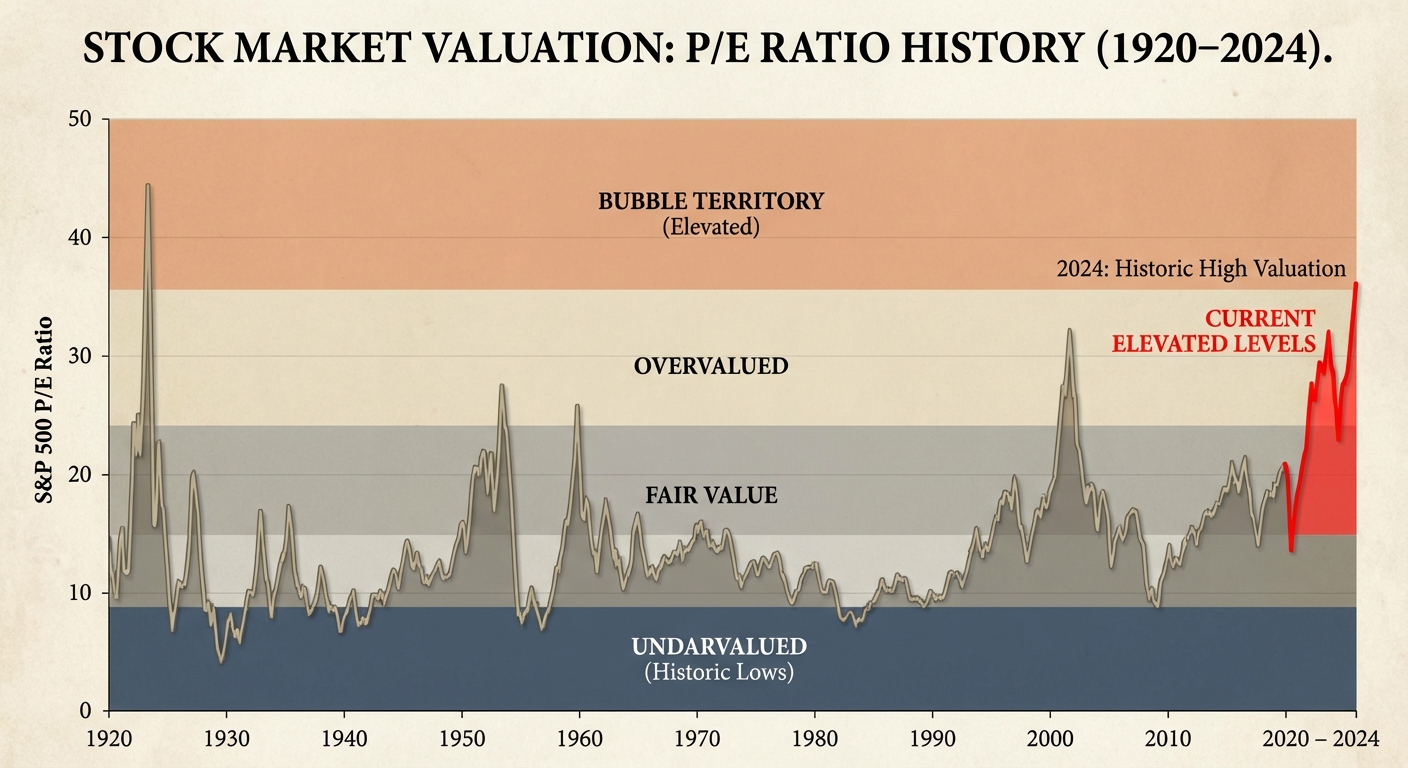
The bull case is compelling, but it exists alongside warning signs that experienced investors cannot ignore. Bank of America strategist Savita Subramanian noted this week that the S&P 500 has “never been more expensive” when measured across various valuation metrics. This doesn’t mean a crash is imminent, but expensive markets are vulnerable to disappointment in ways that cheap markets are not.
Consider what current valuations imply about future growth. For stocks to justify their prices, corporate earnings need to grow substantially and consistently for years. That requires not just AI delivering on its promises but also continued economic expansion, stable interest rates, and an absence of major disruptions. Missing any of these targets could trigger repricing that feels brutal even if it’s merely a return to historical norms.
The economic data underlying this rally is also showing early signs of strain. Chris Williamson of S&P Global Market Intelligence observed that “business activity continued to expand in December, rounding off another quarter of robust growth, but the resilience of the US economy is showing signs of cracking.” He noted that “future output expectations” are “running much lower than seen at the start of 2025.” This divergence between current strength and forward expectations is exactly the kind of signal that precedes economic turning points.
Concentration risk adds another layer of concern. When a handful of stocks drive market gains, the index becomes vulnerable to problems at those specific companies. The AI bet is spreading across more names than the “Magnificent Seven” tech stocks that dominated 2024, but it’s still a bet. If AI development costs prove higher than expected, if deployment challenges multiply, or if the productivity gains fail to materialize at scale, the companies leading this rally could give back gains quickly.
Corporate News Moving Markets
Beyond the macro trends, specific corporate developments are shaping the investment landscape. American International Group announced that CEO Peter Zaffino will step down by mid-2026, transitioning to executive chair while Eric Andersen takes over as president and CEO-elect effective February 16. Leadership transitions at major corporations often signal strategic shifts, and AIG’s move will be watched closely by institutional investors.
Vistra shares rose nearly 5% after announcing an agreement to acquire Cogentrix Energy for approximately $4 billion. Utility sector consolidation has accelerated as companies position for the energy transition, and deals at this scale reshape competitive dynamics. Microchip Technology advanced over 4% after issuing fiscal third-quarter revenue guidance of about $1.185 billion, above prior forecasts and suggesting continued demand strength in the semiconductor sector.
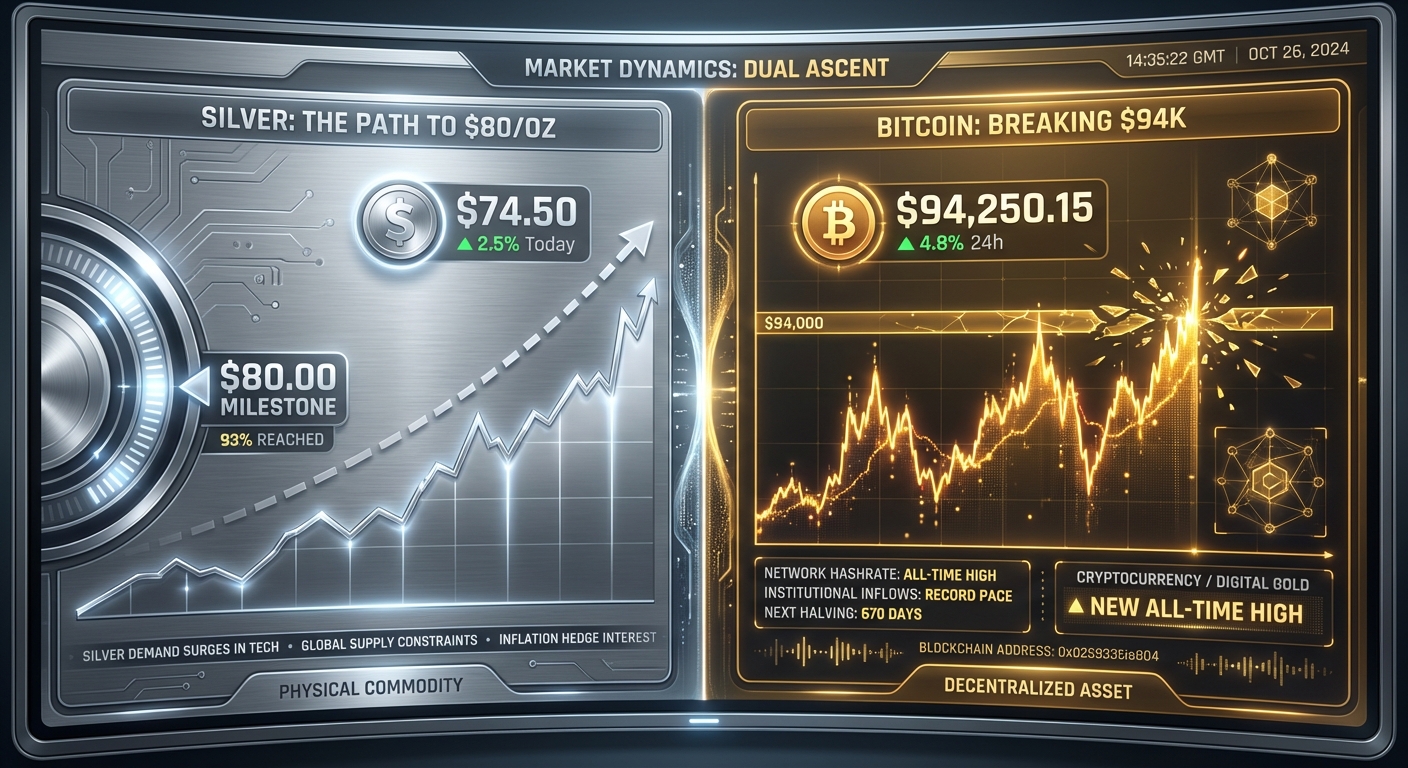
Alternative assets are participating in the rally as well. Silver is trading above $80 an ounce, on pace for a record close at that level. The precious metal ended 2025 up more than 140%, an extraordinary performance that reflects both industrial demand from electronics and renewable energy applications and traditional safe-haven buying. Bitcoin traded above $94,000, continuing its post-election rally as institutional adoption expands and regulatory clarity improves.
The financial sector has outperformed, with investors betting on a strong US economy supporting loan growth and trading activity. Higher interest rates, while potentially problematic for some sectors, have expanded bank net interest margins. If the economy continues expanding while the Fed cuts rates gradually, banks could see the best of both worlds: continued economic activity with reduced default risk.
What Could Go Wrong
No discussion of record markets is complete without acknowledging tail risks. The S&P 500 has “risks abound in 2026,” as Subramanian put it, and cataloging them helps contextualize what the rally requires to continue.
Geopolitical tensions remain elevated. Trade policy uncertainty could intensify depending on political developments. The conflict in Ukraine continues without clear resolution, and tensions in other regions could escalate. Markets have largely shrugged off geopolitical risk for the past year, but that could change rapidly if events demand attention.
The AI bet itself carries execution risk. The technology works, but deploying it at scale across enterprises involves challenges that demos and benchmarks don’t reveal. Integration with existing systems, workforce retraining, security vulnerabilities, and regulatory responses could all slow adoption below current expectations. The stocks leading this rally are priced for AI to transform the economy, not for AI to be a useful tool that gradually improves productivity.
Inflation could prove stickier than expected, preventing the Fed rate cuts that markets anticipate. Energy prices remain volatile. Labor markets are tight in ways that could push wages higher. Any of these factors could change the monetary policy trajectory and force investors to recalculate.
Practical Considerations
For individual investors, record markets create a psychological challenge. Missing out on gains feels painful, but buying at all-time highs creates risk of buying near a top. The research on this question is actually reassuring: stocks are at all-time highs roughly 5% of all trading days historically, and buying at those points has not systematically produced worse returns than buying at other times. Markets trend upward over long periods, so all-time highs are a feature of healthy markets, not a warning sign.
That said, portfolio construction matters more than market timing. Ensuring adequate diversification, maintaining cash reserves for opportunities, and aligning risk exposure with actual time horizons are all more important than guessing whether January’s rally continues through February.
For businesses, the market environment supports expansion. Capital is available and relatively cheap. Investor appetite for growth stories remains strong. Companies contemplating going public, raising capital, or making acquisitions face favorable conditions. The risk is that these conditions could change quickly if sentiment shifts.
The Bottom Line
The stock market’s record-setting start to 2026 reflects genuine optimism about artificial intelligence’s economic potential, combined with expectations for favorable monetary policy and resilient corporate earnings. These aren’t irrational beliefs. AI is transforming productivity, the Fed is signaling rate cuts, and corporate America has navigated recent challenges better than expected.
But the market has also priced in considerable good news, leaving little margin for disappointment. Valuations are stretched by historical standards, concentration in AI-adjacent stocks creates sector-specific risk, and early economic indicators suggest the expansion may be maturing. This isn’t a prediction of imminent correction, but it is a reminder that markets moving this fast in one direction rarely do so indefinitely.
Watch how AI companies report earnings through the first quarter. The gap between AI hype and AI reality will narrow or widen based on what these companies actually deliver. Watch the Fed for signals on rate cut timing, as any hawkish surprise could trigger a repricing. And watch economic data for signs that the resilience underpinning this rally is sustainable. The market has made its bet on 2026. Now we find out whether that bet pays off.
Sources: CNN Business, CNBC, Bloomberg, Yahoo Finance, NBC News.