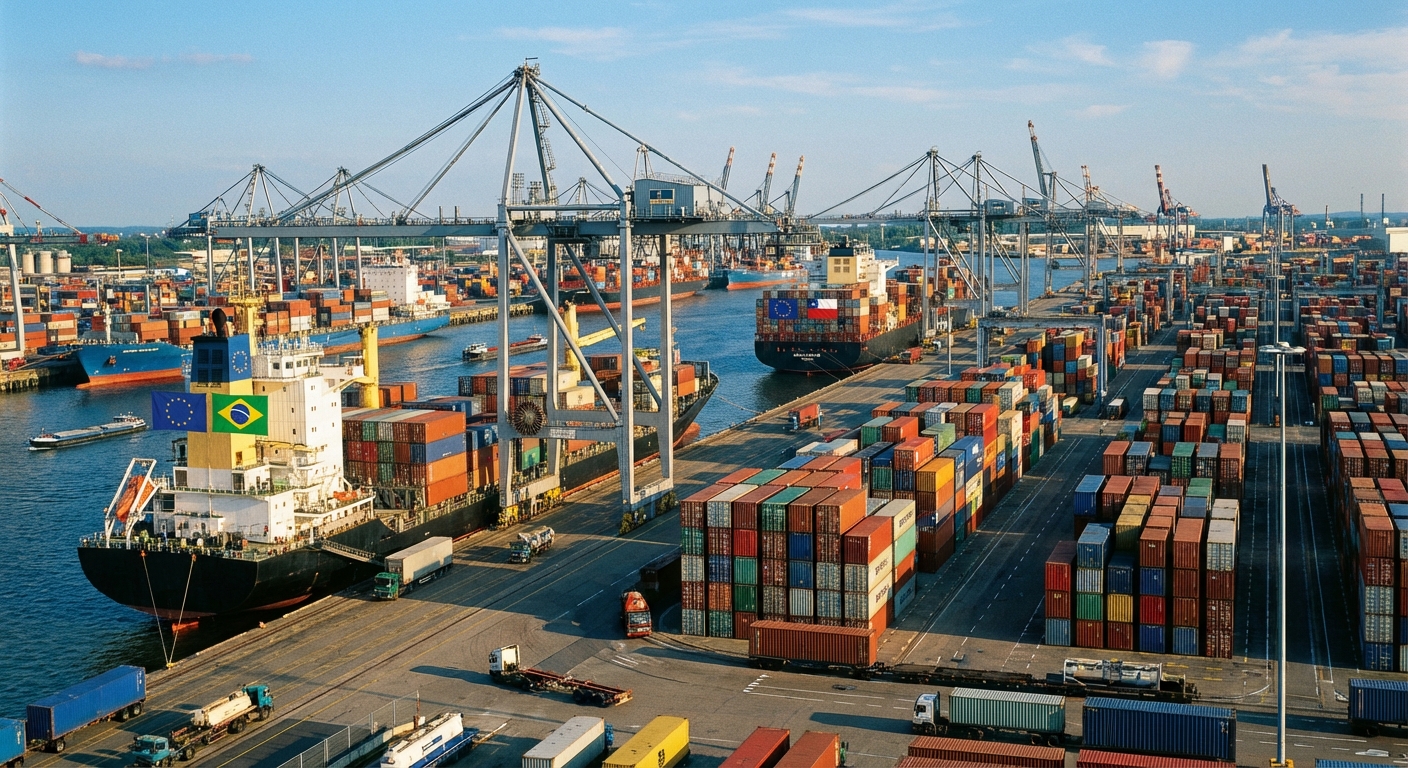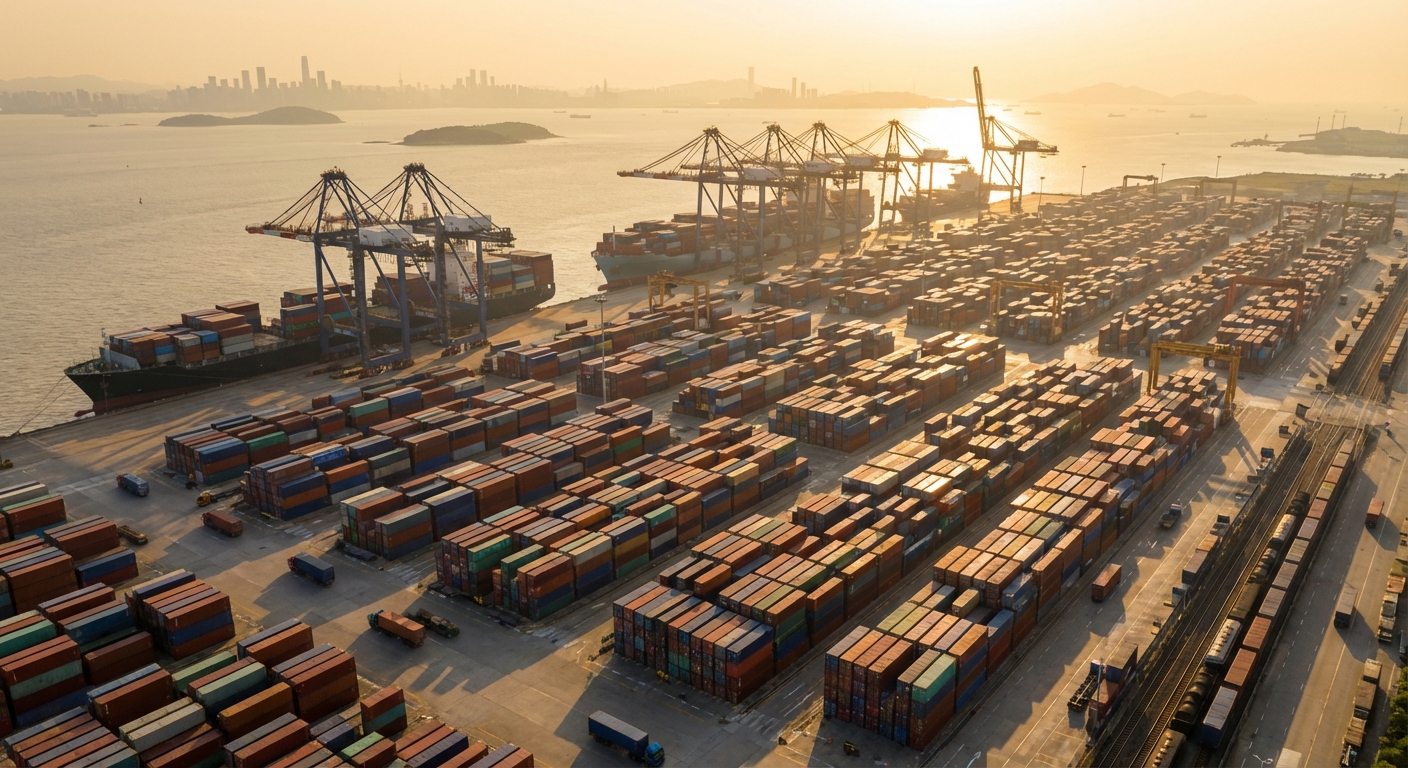
China’s trade surplus hit a record $1.2 trillion in 2025. That number tells you everything you need to know about how Trump’s tariff strategy is playing out, and it’s not the story the administration wants to tell.
The data, released Wednesday by China’s General Administration of Customs, shows exports to other countries more than compensated for the 20% drop in shipments to America. While the United States imposed tariffs as high as 145% at various points last year, Chinese manufacturers simply found other customers. The result: a surplus 20% larger than 2024, defying predictions that economic pressure would force Beijing to the negotiating table on American terms.
The Numbers That Matter
China exported $3.77 trillion in goods last year while importing just $2.58 trillion. That $1.2 trillion gap represents the largest trade surplus any country has recorded in modern history, surpassing China’s own previous record of $992 billion in 2024.
The breakdown reveals how China’s trade machine adapted to American pressure:
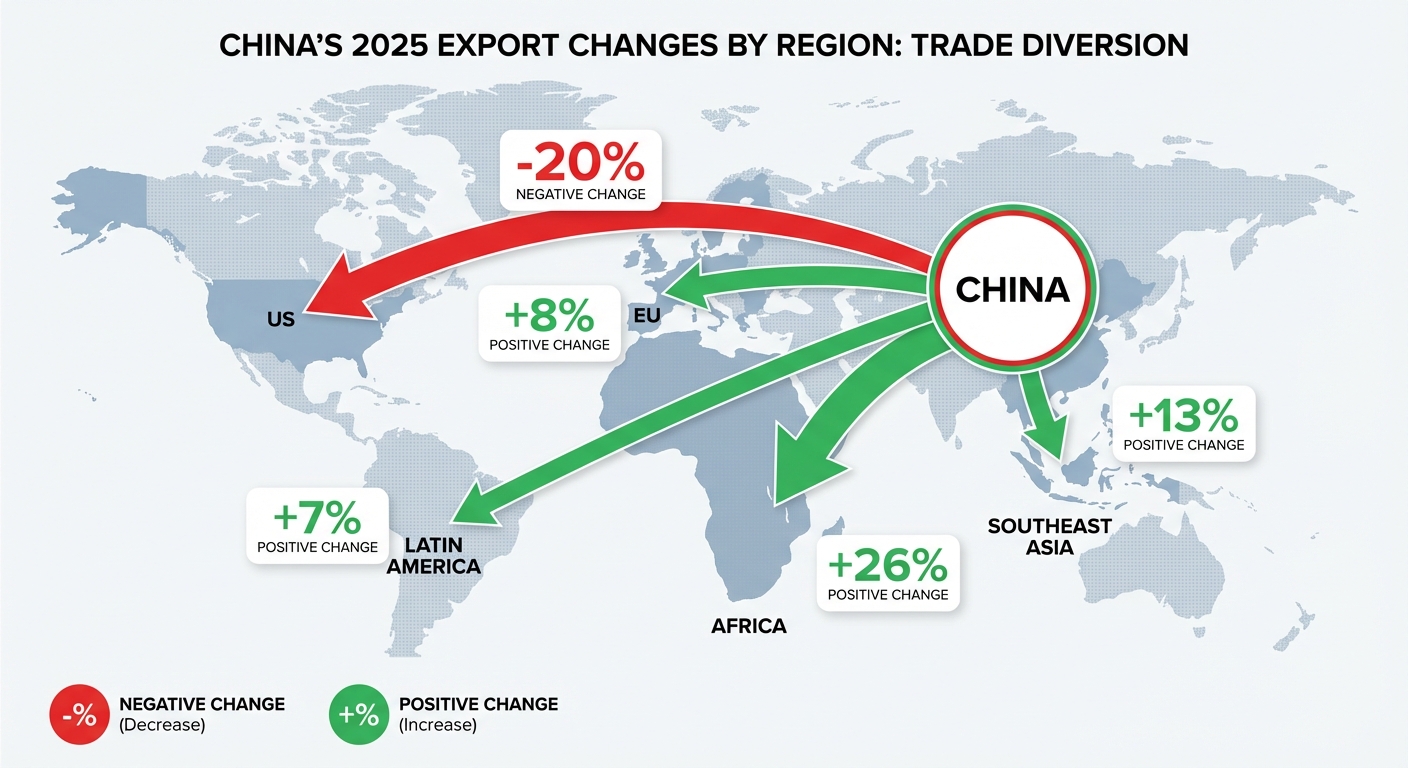
Exports to the United States fell 20% as tariffs made Chinese goods more expensive for American buyers. That’s a significant hit, but it didn’t break China’s export economy because shipments to everywhere else kept growing. Exports to Africa surged 26%. Southeast Asian markets grew 13%. European Union shipments increased 8%. Latin America saw 7% growth.
The sectors driving growth tell an even clearer story about China’s economic trajectory. Auto exports jumped 21% to more than 7 million vehicles, fueled by electric vehicles and plug-in hybrids that are increasingly competitive on global markets. High-tech goods, including industrial robots and advanced machine tools, grew 13%. The combined category of EVs, lithium batteries, and solar panels surged 27%.
Why This Matters for Americans
The record surplus undercuts the core logic of the tariff strategy. The theory was simple: impose costs on Chinese goods, American consumers buy less, Chinese factories lose orders, Beijing feels economic pain, China makes concessions at the negotiating table.
What actually happened was more complicated. American consumers did pay higher prices on Chinese imports, and some manufacturing did shift to Vietnam, Mexico, and other countries. But China’s overall export machine didn’t slow down. It just redirected.
For American businesses and consumers, this means the costs of tariffs, estimated at $80 billion annually in higher prices, haven’t achieved the strategic objective they were supposed to justify. China still manufactures, still exports, and still runs massive surpluses. American buyers just pay more for what they import, while Chinese manufacturers sell to customers elsewhere.
The October trade deal between Trump and Xi reduced tariffs on Chinese goods to 20%, down from their peak of 145%. That’s still significantly higher than pre-2018 levels, but it reflects a reality both sides have accepted: the tariff war produced costs without changing the fundamental trade relationship.
The Context: How China Pivoted
China’s ability to absorb the tariff shock reflects years of deliberate diversification. Beijing has invested heavily in trade infrastructure across the developing world through the Belt and Road Initiative. Chinese companies established distribution networks, financing arrangements, and political relationships that now pay dividends when American markets become hostile.
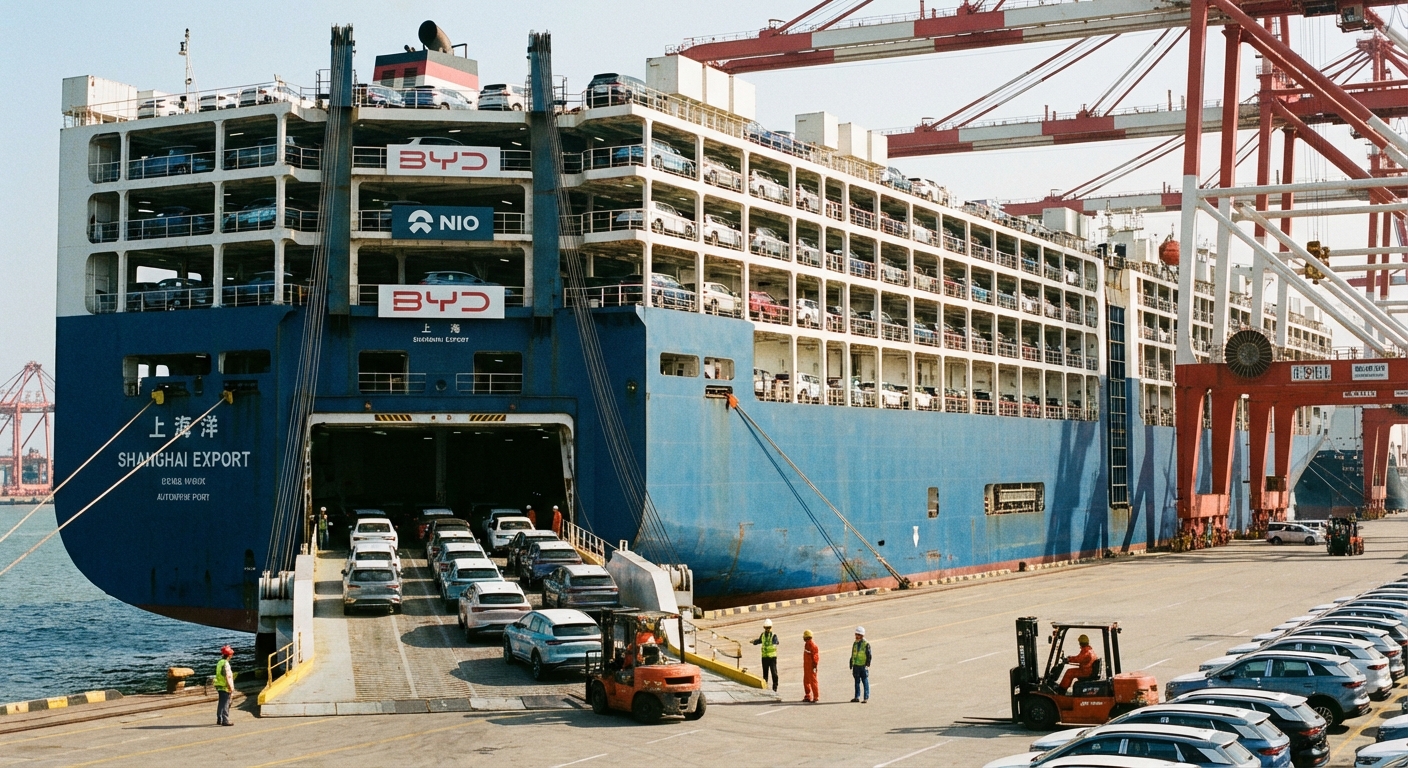
The electric vehicle story illustrates this strategy. Five years ago, Chinese EVs were barely present outside Asia. Today, brands like BYD sell across Europe, Latin America, and Southeast Asia, often undercutting European and Japanese competitors on price while matching them on quality. The 7 million vehicles exported in 2025 represent a 21% increase from 2024, and the trajectory suggests continued growth.
American automakers, meanwhile, face the awkward reality that their own EV ambitions depend partly on Chinese battery technology and manufacturing expertise. The trade relationship isn’t cleanly separable into “us versus them” categories.
What Beijing Says
Chinese officials are projecting confidence while acknowledging challenges. Vice Minister of Customs Wang Jun described 2026’s trade environment as “severe and complex,” a diplomatic way of noting that American tariffs, European carbon border taxes, and various protectionist measures worldwide create headwinds.
But the record surplus gives Beijing leverage it lacked when trade tensions peaked. Chinese negotiators can credibly argue that their economy absorbs pressure better than critics predicted. The “decoupling” strategy that some American hawks advocate faces the practical reality that China’s integration into global supply chains actually deepened in 2025, just with different geographic emphasis.
What’s Next
Economists expect China’s trade surplus to remain above $1 trillion through 2026, even as growth moderates. Natixis economist Gary Ng forecasts export growth of about 3% this year, down from 5.5% in 2025, as high comparison bases and continued trade friction create headwinds.
For the Trump administration, the numbers present a messaging challenge. The tariff strategy was sold as economic warfare that would force Chinese concessions. The data suggests China found workarounds while American consumers bore costs. Whether that trade-off was worthwhile depends on your assessment of less visible effects: technology transfer restrictions, supply chain diversification, strategic decoupling in sensitive sectors.
The Bottom Line
China’s record $1.2 trillion trade surplus demonstrates that tariffs alone don’t reshape global trade flows. Chinese manufacturers adapted by selling to Africa, Southeast Asia, Europe, and Latin America, offsetting the 20% decline in American sales. The result: American consumers paid tariff costs while China’s export economy grew anyway. The trade war continues, but the scorecard looks different than either side predicted.
Sources: ABC News, NPR, CNN Business, Bloomberg, NBC News, China General Administration of Customs, Natixis research