
The remote work experiment that began in March 2020 is officially over at many of America’s largest employers. Amazon, Dell, JPMorgan Chase, and dozens of other major companies have announced mandatory five-day return-to-office policies, reversing years of hybrid arrangements and sparking fierce debate about the future of work.
This isn’t a gradual shift. Companies are issuing ultimatums: return to your desk or find another job. Dell told remote workers they’d be ineligible for promotions. Amazon CEO Andy Jassy said employees who can’t commit to in-office work should leave. JPMorgan’s Jamie Dimon called remote work an arrangement that “doesn’t work for young people” and suggested it damages career development.
The reversal raises questions that go beyond individual company policies. Why now, after years of data suggesting remote work doesn’t hurt productivity? What’s really driving these decisions? And what happens to the millions of workers who restructured their lives around remote work?
The Real Reasons Behind the Push
Company executives cite collaboration, culture, and mentorship as reasons for return mandates, but internal tensions tell a more complicated story. Several factors are converging to make 2026 the year of the office comeback.
The commercial real estate problem looms large. Many companies signed long-term leases for expensive office space before 2020, and those leases are still running. Empty offices represent millions in sunk costs, and some executives face pressure from boards to justify that spending. Getting workers back makes the balance sheet look less wasteful, even if the productivity math doesn’t demand it.
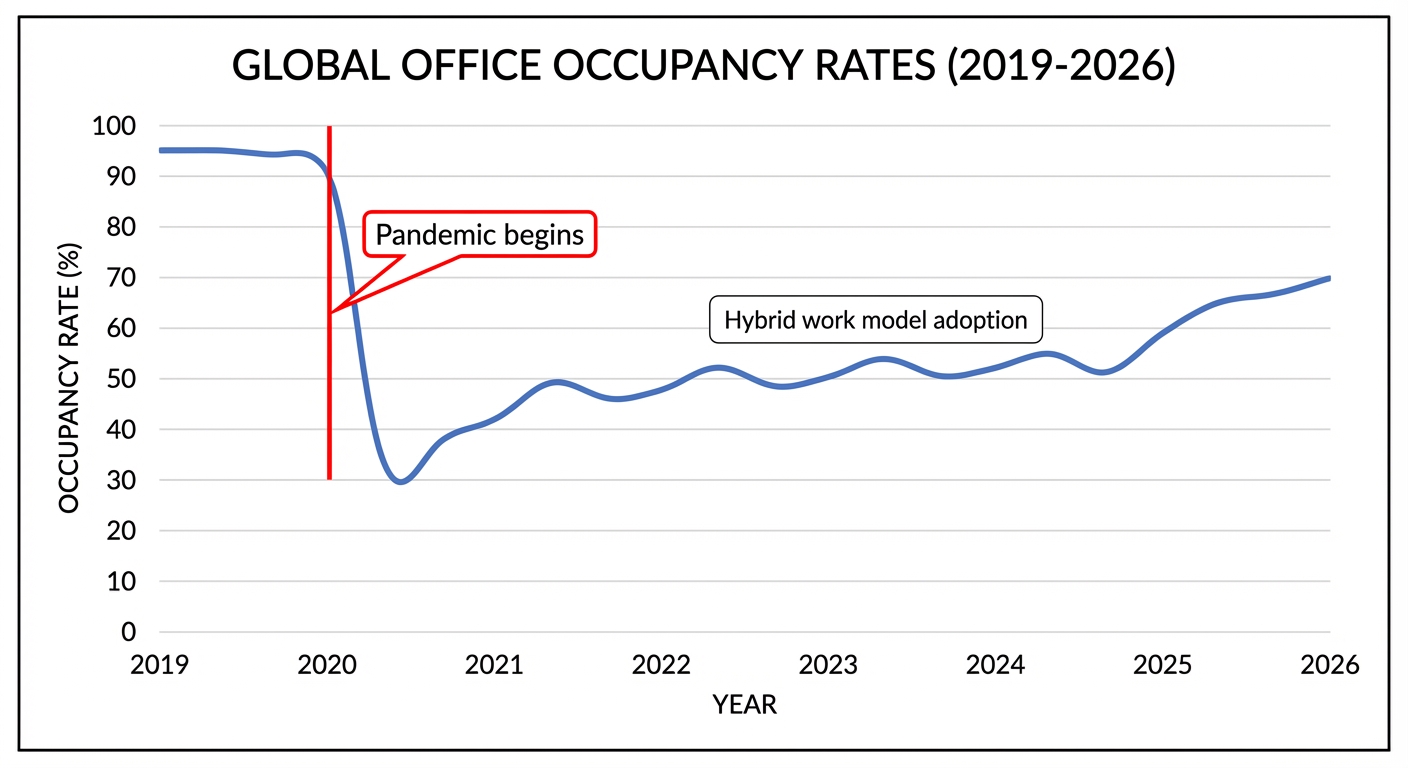
There’s also a control dimension that rarely gets discussed openly. Remote work shifted power toward employees in ways that made some managers uncomfortable. When workers can do their jobs from anywhere, they have more leverage to leave for better opportunities. In-office requirements create friction that makes switching jobs harder. Some companies have admitted, in internal communications that later leaked, that return mandates are partly about reducing headcount without formal layoffs.
The collaboration and culture arguments are genuine for some leaders, even if the evidence is mixed. Junior employees do miss out on the informal learning that happens when you overhear senior colleagues or grab coffee with people from other departments. Video calls don’t replicate the serendipity of physical proximity. Whether these benefits outweigh the costs of commuting, childcare complications, and reduced flexibility is the debate no one can definitively settle.
What Workers Are Doing About It
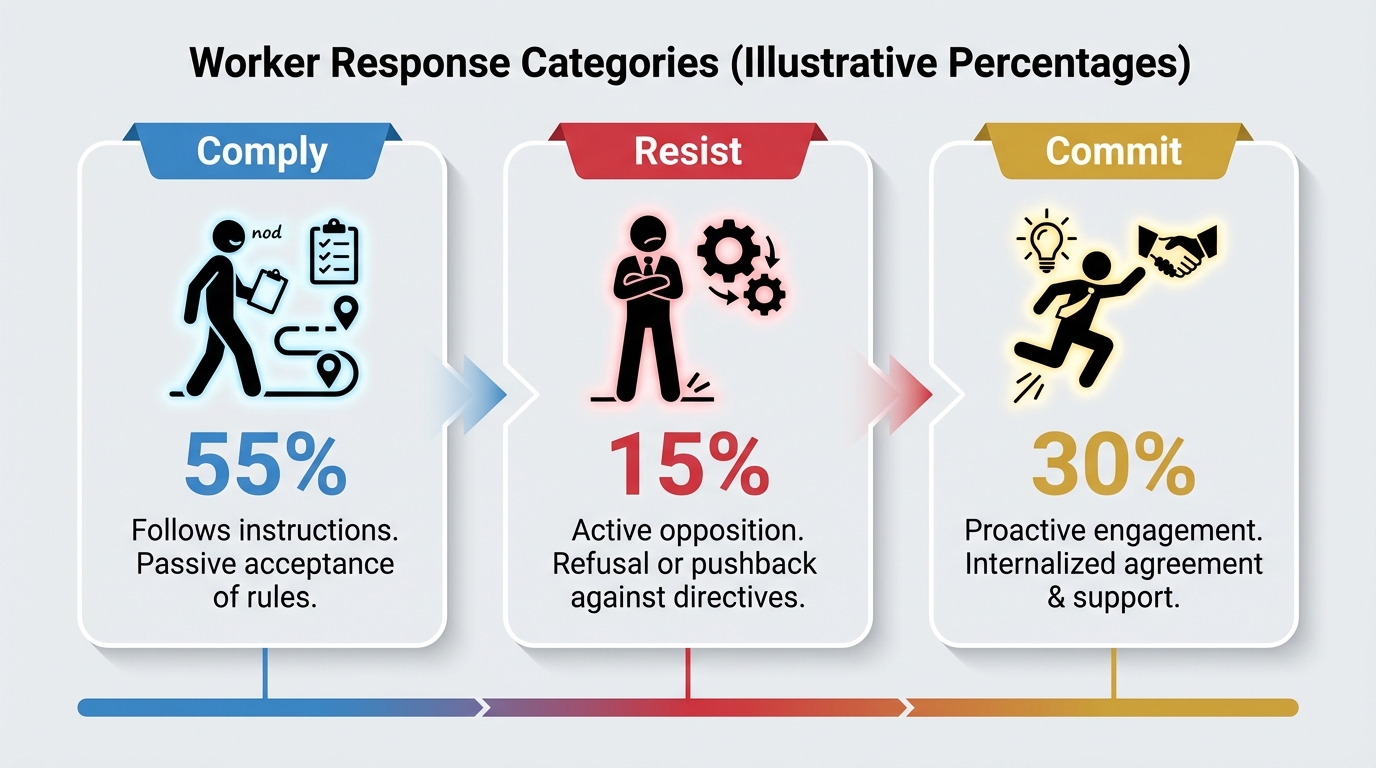
Employees aren’t accepting return mandates quietly. Some are complying with visible resentment, a phenomenon HR departments call “resenteeism,” where workers show up physically but disengage mentally. Others are engaging in what’s been called “coffee badging”: swiping into the office to register attendance, then leaving after minimal time.
The most dramatic response is departure. Companies that have implemented strict return-to-office policies report higher attrition, particularly among women, caregivers, and workers with disabilities who benefited most from remote flexibility. Tech workers, who have the most portable skills, are disproportionately represented among those who quit rather than return.
Labor organizing around remote work has increased. Some Amazon warehouse workers have joined with corporate employees to protest the company’s return mandate, framing it as a quality-of-life issue that affects workers at all levels. Several tech companies have seen internal petitions with thousands of signatures demanding policy reversals.
The labor market context matters here. In 2021 and 2022, workers had enormous leverage during the “Great Resignation,” and companies competed on flexibility. By late 2025, the balance had shifted. Tech layoffs and a cooling job market gave employers confidence to impose unpopular policies that workers would have rejected during the hiring surge.
What the Research Actually Shows
The productivity debate remains unsettled, which is part of the problem. Studies on remote work productivity have produced contradictory findings, often depending on who funded them and how productivity was measured.
Research from Stanford economist Nick Bloom, who has studied remote work for years, suggests that fully remote workers are slightly less productive than in-office workers, but hybrid arrangements (with two or three remote days per week) match or exceed full-time office productivity. His research also shows that remote work reduces employee turnover, which has significant cost implications that simple productivity metrics miss.
Microsoft’s own workplace research, released in 2024, found that employees felt equally productive at home but that innovation metrics, as measured by cross-team collaboration and new project generation, declined in fully remote environments. The company has maintained a hybrid policy rather than mandating full return.
The problem with all this research is that it measures averages across populations. Individual workers vary enormously. Some people thrive with the focus that home provides; others need the structure of an office to stay on task. Some roles, particularly creative and collaborative ones, may genuinely benefit from in-person work. Others, like coding or writing, might not. Blanket policies treat everyone the same, which guarantees that some portion of the workforce will be poorly served.
Who Wins and Who Loses
Return-to-office mandates don’t affect everyone equally, and the uneven impact is reshaping the workforce in ways that will take years to fully understand.
Workers with caregiving responsibilities, disproportionately women, face the sharpest trade-offs. Remote work allowed many parents to remain employed while handling school pickups, sick children, and aging parents. Mandated office returns force choices between career and family that remote work had eased. Early data suggests women are leaving returning-to-office companies at higher rates than men.
Workers with disabilities benefited enormously from remote arrangements that eliminated commuting barriers and allowed for more comfortable work environments. Some companies have carved out ADA-related exceptions, but others have applied mandates uniformly, creating legal questions that haven’t been fully tested.
Geographic mobility is also reversing. Workers who moved to lower-cost cities during the remote work era now face impossible choices: relocate back to expensive cities, endure punishing commutes, or find new jobs. Real estate markets in pandemic-era boomtowns are already feeling the impact.
The winners, at least in corporate thinking, are junior employees who get more mentorship exposure and companies that believe culture requires physical presence. Time will tell whether these benefits justify the costs.
The Bottom Line
The return-to-office wave isn’t about a single policy insight or a definitive answer to whether remote work works. It’s about power, real estate, and a management philosophy that associates presence with productivity, even when evidence is mixed.
Workers have less leverage now than they did in 2021, and many will comply with return mandates despite private resistance. But the friction is real. Companies implementing the strictest policies are seeing their most mobile talent leave, while resentful compliance undermines the cultural benefits they claim to be seeking.
This isn’t the end of remote work. Many companies, particularly in tech, are doubling down on distributed teams as a competitive advantage for recruiting. The divide between “office culture” companies and “flexibility-first” companies is becoming a meaningful differentiator in the labor market. Where you want to work, and how you want to work, may increasingly determine who you work for.