Scientists have demonstrated a new way to reactivate dormant genes without cutting the DNA strand, a breakthrough that could make gene therapy significantly safer. The technique, published this month, uses CRISPR technology not to edit genes but to remove chemical tags that silence them. For patients with conditions like sickle cell disease and Huntington’s disease, where turning genes back on could provide treatment, this gentler approach addresses one of the biggest concerns about current gene editing: the risk of unintended changes to the genome.
The discovery also settles a long-running scientific debate about how gene silencing actually works. Researchers have known for decades that chemical tags called methyl groups can turn genes off, but whether these tags actively silence genes or simply mark already-silent genes has been unclear. The new work confirms that removing the tags does reactivate genes, which means targeting these tags is a viable therapeutic strategy.
How Gene Silencing Works
Every cell in your body contains the same DNA, but different cells express different genes. Liver cells express liver genes; brain cells express brain genes. The mechanism that determines which genes are active in which cells involves chemical modifications to DNA and the proteins that package it. Methyl groups, small molecules that attach to specific locations on DNA, act like molecular anchors that keep genes turned off.
This system is essential for normal development and function. Problems arise when genes that should be active get silenced, or when silencing that should be temporary becomes permanent. In sickle cell disease, for example, everyone naturally produces fetal hemoglobin before birth, which handles oxygen more efficiently than adult hemoglobin. After birth, a gene switch turns off fetal hemoglobin production. If you could turn that gene back on in adults with sickle cell disease, their bodies would produce working hemoglobin even though their adult hemoglobin gene is mutated.
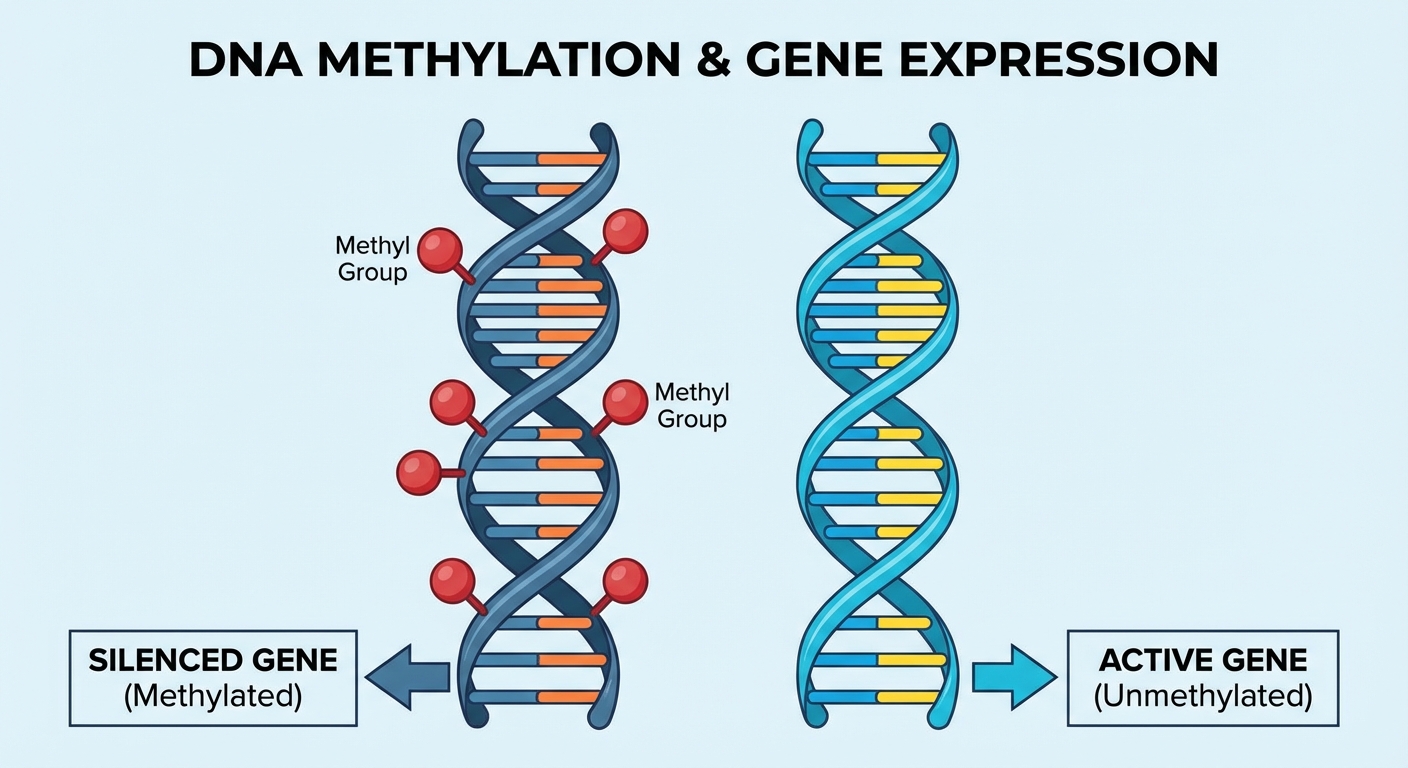
Current CRISPR therapies for sickle cell disease work by cutting DNA to disrupt the gene that controls this switch. The treatment is effective but involves permanently altering the genome in ways that are difficult to reverse if something goes wrong. The new technique offers a potentially safer alternative: remove the silencing marks without cutting the DNA, allowing the gene to turn back on while leaving the underlying sequence intact.
The difference matters because DNA cuts can sometimes cause unintended changes elsewhere in the genome. Even with precise targeting, the cell’s repair mechanisms occasionally introduce errors. A technique that avoids cutting entirely eliminates this category of risk, which becomes increasingly important as gene therapy moves from last-resort treatments into broader medical use.
What the New Technique Actually Does
The breakthrough involves engineering CRISPR to remove methyl groups rather than cut DNA. Traditional CRISPR systems use a guide RNA to find a specific DNA sequence and a protein called Cas9 to cut both strands. The new approach replaces Cas9 with an enzyme that strips away methyl groups, leaving the DNA sequence completely intact.
When researchers applied this technique to cells with silenced genes, the genes reactivated. This confirmed that the methyl groups were actively keeping the genes off, not just marking them as silent. It also demonstrated that the effect is reversible: cells that had the silencing removed could have it reapplied, and vice versa. This controllability could be valuable in therapeutic contexts where permanent changes aren’t desirable.
The implications extend beyond sickle cell disease. Huntington’s disease is caused by a mutant gene that produces a toxic protein. Current research aims to turn off this mutant gene or reduce its expression. The new CRISPR approach could potentially increase silencing of harmful genes just as it can decrease silencing of beneficial ones. A gene therapy for Huntington’s using this technique is entering clinical trials, testing whether slowing the disease’s progression is possible.
Cancer treatment represents another potential application. Tumor cells often silence genes that would normally suppress their growth. If those genes could be reactivated without cutting DNA, it might restore normal cell regulation. The technique could also help in research settings, where scientists need to turn genes on and off to understand their functions.
The Safety Advantage
The safety improvements matter enormously for making gene therapy a routine medical option. Current gene editing requires patients to accept some risk of off-target effects: cuts in the wrong places that could theoretically cause new problems, including cancer. For diseases that are otherwise fatal, this risk is acceptable. For conditions that are serious but not immediately life-threatening, the risk-benefit calculation is more difficult.

A technique that doesn’t cut DNA changes this calculation. If the worst-case scenario is that the treatment doesn’t work rather than that it causes unintended genetic damage, gene therapy becomes applicable to a much wider range of conditions. Patients and doctors become more willing to try interventions earlier in disease progression, when they might be more effective.
The regulatory pathway may also be smoother. The FDA has been cautious about approving gene therapies that permanently alter DNA, requiring extensive safety data before approval. A technique that leaves DNA intact might face different regulatory considerations, potentially reaching patients faster. This isn’t guaranteed, as regulators will still want evidence of safety and efficacy, but the inherent risk profile is different.
What Comes Next
The technique is currently at the research stage, with clinical trials planned or underway for specific conditions. The timeline from laboratory demonstration to approved treatment typically spans years, so patients shouldn’t expect immediate availability. However, the scientific foundation is now established, which means the remaining work is engineering and testing rather than fundamental discovery.
Several gene therapy companies are already working to commercialize this approach. The sickle cell application is furthest along, building on years of research into reactivating fetal hemoglobin. Huntington’s disease trials will test whether the technique can slow neurodegeneration in patients who have already begun experiencing symptoms. Other conditions involving silenced genes will likely follow as the platform proves out.
The broader significance is that gene therapy is becoming more precise and less risky with each generation of technology. First-generation approaches involved inserting genes somewhat randomly into the genome. CRISPR improved precision dramatically but still involves cutting DNA. This new approach adds another tool to the kit, one that can modify gene expression without touching the underlying sequence.
The Bottom Line
The ability to turn genes on without cutting DNA represents a meaningful advance in gene therapy safety. By removing molecular silencing marks rather than editing the genome itself, researchers can reactivate beneficial genes with lower risk of unintended consequences. For conditions like sickle cell disease, where turning on a dormant gene could provide treatment, this approach offers a potentially safer path to therapy.
The discovery also validates a theory that scientists have debated for years: methyl groups actively silence genes rather than merely marking already-silent ones. This confirmation opens research directions across multiple fields, from cancer treatment to developmental biology.
Watch for clinical trial results over the next two to three years. The Huntington’s disease trial is particularly significant because it will test whether this approach can slow a progressive neurodegenerative condition. Success there would demonstrate the technique’s potential beyond blood disorders. Also watch for how regulators respond to gene therapies that don’t cut DNA; a faster approval pathway could accelerate the entire field.
Sources: ScienceDaily, Live Science, Mass General Brigham, Nature.