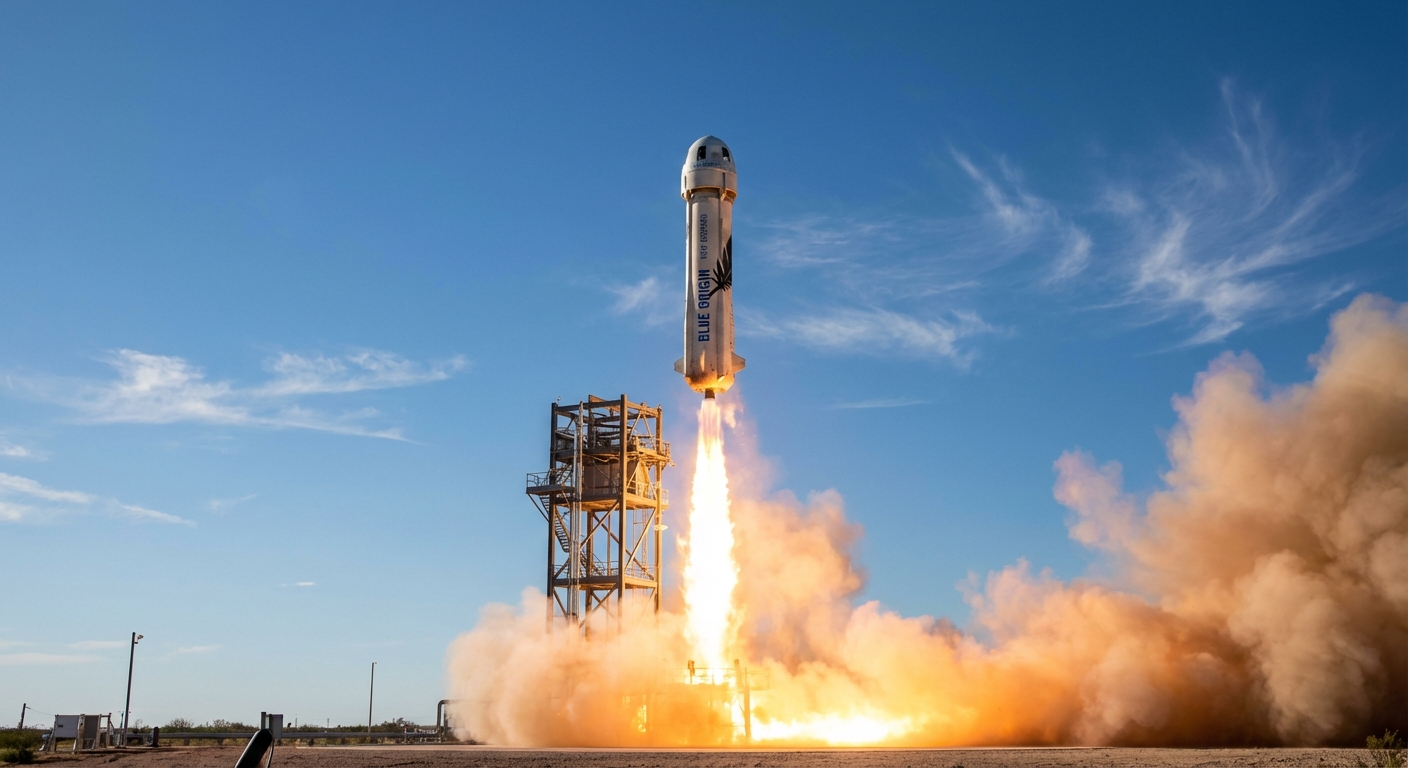
Michaela Benthaus just became the first person with paraplegia, and the first wheelchair user, to travel to space. The German engineer flew on Blue Origin’s New Shepard vehicle today, crossing the Karman line at 100 kilometers altitude before returning safely to Earth. The sub-orbital flight lasted approximately 11 minutes.
For the disability rights community, the mission represents something that seemed impossible not long ago. Space travel has always had strict physical requirements, reflecting both the genuine challenges of surviving launch and the historical assumption that astronauts needed to be in peak physical condition. Benthaus’s flight challenges that assumption directly.
“Space is for everyone,” Benthaus said in a pre-flight interview. “Not just athletes, not just people with perfect bodies. The universe doesn’t care whether you can walk.”
Who Is Michaela Benthaus
Benthaus, 38, is a mechanical engineer who was paralyzed in a car accident in 2015. Before her injury, she was already working in aerospace, designing components for satellite systems. After months of rehabilitation, she returned to engineering and became an advocate for disability inclusion in STEM fields.
Her path to space began when she applied to Blue Origin’s astronaut program, which has increasingly marketed space tourism to civilians. The company had never flown someone with significant mobility impairment, and the application triggered internal discussions about what accommodations would be necessary.
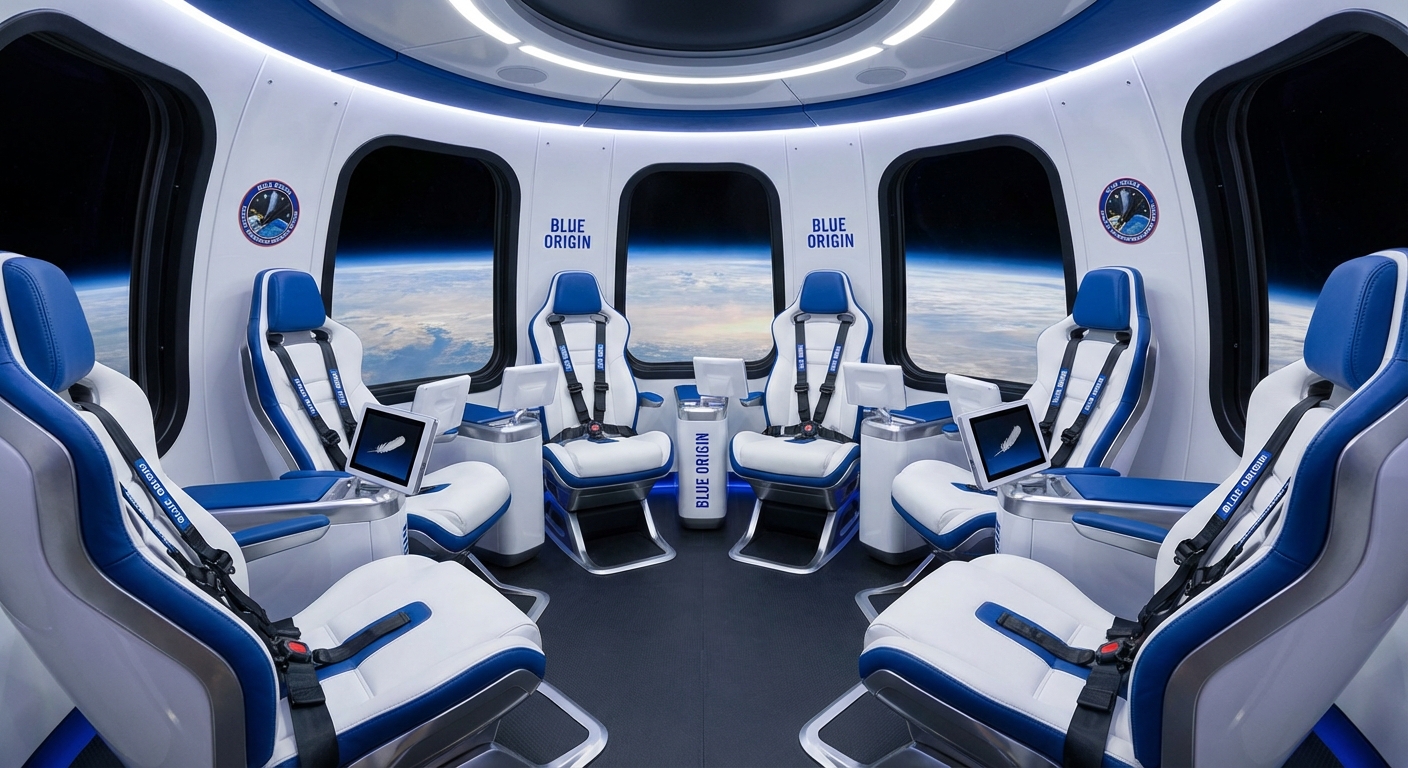
What Blue Origin discovered was that the barriers were more cultural than technical. The New Shepard capsule already had restraint systems designed to secure passengers during the high-G portions of flight. With relatively minor modifications, those systems could accommodate someone who couldn’t use their legs for stability. The bigger challenge was rethinking procedures and training, not hardware.
Why This Matters
The history of spaceflight has been remarkably exclusionary regarding disability. Early astronauts were selected from military test pilots, a profession that required perfect physical specimens. Even as space agencies expanded their astronaut corps to include scientists and engineers, strict medical standards persisted.
Those standards made sense when space missions lasted months and required astronauts to handle emergencies in cramped, demanding environments. But sub-orbital tourism is different. The flights are short, the capsules are automated, and the physical demands, while real, are more manageable than traditional spaceflight.
Benthaus’s flight proves that people with significant disabilities can safely experience space, at least in the context of brief sub-orbital trips. That’s a meaningful expansion of who gets to participate in what was once humanity’s most exclusive club.
The Accessibility Questions
Not everyone is celebrating without reservation. Some disability advocates have noted that a ticket on Blue Origin costs hundreds of thousands of dollars, making space tourism accessible only to the wealthy regardless of physical ability. The flight demonstrates that disabled people can go to space, but it doesn’t mean most disabled people ever will.
There are also questions about what “accessible spaceflight” really means. Benthaus was able to transfer from her wheelchair to the capsule seat and tolerate the physical stresses of launch and landing. Someone with more severe mobility limitations, or different types of disabilities, might face barriers that today’s technology can’t address.
Blue Origin has stated that it’s committed to continuing to expand access and will apply lessons from Benthaus’s flight to future missions. But the company hasn’t announced specific timelines or plans for making space tourism genuinely accessible at scale.
The Bigger Picture
Space exploration has always been about pushing boundaries, physical, technological, and psychological. Benthaus’s flight pushes a different kind of boundary: the assumption that certain achievements are reserved for certain bodies.
The symbolism matters even if the practical impact is limited. Seeing someone in a wheelchair experience weightlessness and look down at Earth from 100 kilometers up changes what’s imaginable. For young people with disabilities interested in space, it’s evidence that their dreams aren’t automatically foreclosed.
It also raises questions about other frontiers. If space tourism can be made accessible, what about other experiences that have traditionally excluded people with disabilities? The same creative engineering that got Benthaus to space could be applied to adventure travel, extreme sports, and other domains.
The Bottom Line
Michaela Benthaus’s flight is a milestone worth celebrating. The first wheelchair user in space isn’t just a line in a record book; it’s a statement about who gets to participate in humanity’s greatest adventures.
The practical limitations are real. Space tourism remains expensive, and accessibility for people with different disabilities will require continued work. But every barrier that falls makes the next one easier to address.
For now, Benthaus is back on Earth, processing an experience that only about 700 humans have ever had. What she does with that platform, and what Blue Origin does to build on this mission, will determine whether today’s flight is a one-time achievement or the beginning of genuinely inclusive spaceflight.